Underpass music

I admire very much photographers who are able to do street photography of any kind either shooting invisibly or by asking strangers for a photo. Although I love these kinds of photographs I did not dare to do anything like this, therefore. As you have probably noticed already I shoot my friends and relatives most of the times as the same persons appear many times on my blog. All in all, talking to and taking photos of strangers is somewhat natural for some but for most of us including myself it is a challenge.

This is fine actually, but I always try to do new things and find challenges in my photography and the temptation of getting wonderful shots on the street raised so high that eventually I asked someone for a photo and hopefully I will keep doing this practice.

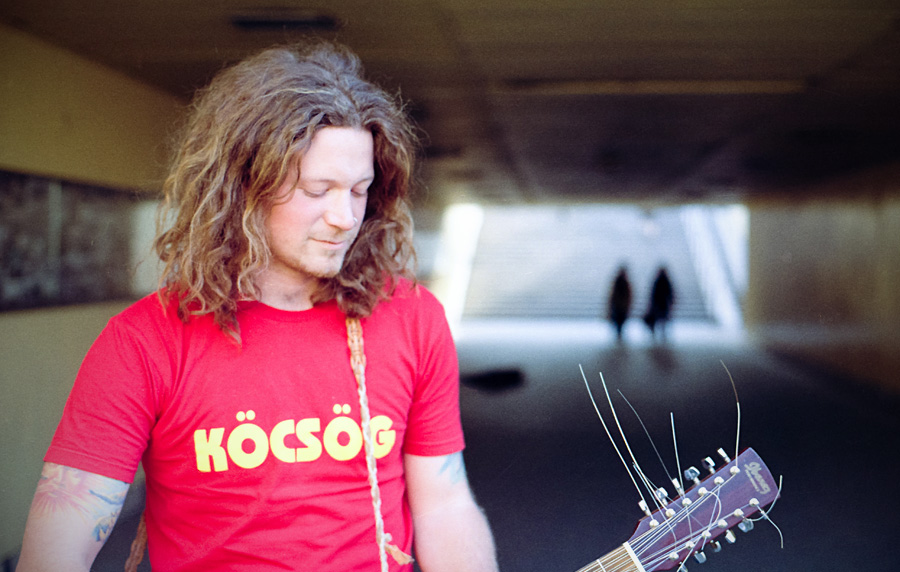
It was easier than I thought, nothing bad had happened, he was very friendly and allowed me to take the shoots below. As you can see he is a musician playing guitar in many places like this underpass  I used to walk through regularly.

I know this is not really a traditional street shoot but can be considered as a street portrait similar to those Ade used to shoot with his medium format Pentax and publish on STREET PORTRAITIST blog I really like.

The camera I used is the latest member of my collection an Olympus OM 4Ti with a stellar Zuiko 50mm f/1.4 lens. It was the very first roll of film I moved trough of this little thing and I am quite happy with the results.

 Olympus OM 4Ti, Zuiko 50mm f/1.4, Kodak Gold 200, Canoscan 9900F
Gábor (Szentendre, Hungary), Olympus OM 4Ti, Zuiko 50mm f/1.4, Kodak Gold 200, Canoscan 9900F
 Olympus OM 4Ti, Zuiko 50mm f/1.4, Kodak Gold 200, Canoscan 9900F
Gábor (Szentendre, Hungary), Olympus OM 4Ti, Zuiko 50mm f/1.4, Kodak Gold 200, Canoscan 9900F
 Olympus OM 4Ti, Zuiko 50mm f/1.4, Kodak Gold 200, Canoscan 9900F
Gábor (Szentendre, Hungary), Olympus OM 4Ti, Zuiko 50mm f/1.4, Kodak Gold 200, Canoscan 9900F

Post apocalyptic atmosphere

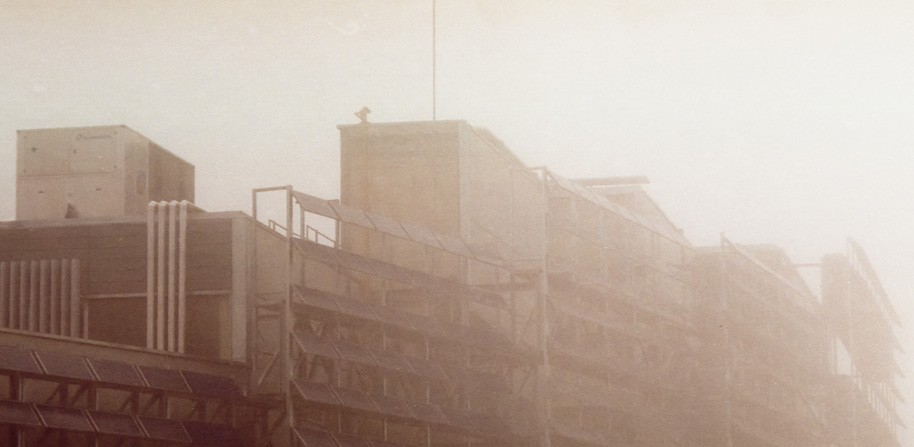
Edifici Narcís Monturiol

I am a huge fan of post-apocalyptic movies, games, and atmosphere overall. In fact, I really would like to participate or work on such a movie one day. Of course being a mortal I have very little chance to do it, but I had to realize that the receipt of post-apocalyptic scenery is actually very simple.

My main ingredients are some early morning mist, a high tech solar cell covered concrete building (very easy to find), an old Exakta loaded with  Kodak Gold and 2 vintage glasses (Zeiss Jena Tessar 50mm f/2.8 and Meyer Optic Trioplan 100mm f/2.8).

For some reason, these shoots remind me of the movie Delicatessen which I can faithfully recommend to watch. OK, there aren’t any high tech in that movie, but the fog creates a similar sensation to me at the opening scenes.

This building, by the way, is a member of the Technological Park of the University in Girona in Spain and I am lucky enough to work in this strange complex. I took these photos a morning during my regular walk to work.

Interesting note that this building is named after Narcís Monturiol i Estarriol who invented the first fully functional submarine. Also interesting the fact that (as far as I know) the solar cells were actually never in use even though the construction has finished around 2009. I hope they will be operational one day. I guess there must be a bit expensive for decoration purposes only. I love the way they look like anyway.

Girona (Spain), Exakta Varex IIa, Meyer Trioplan 100mm f/2.8, Kodak Gold 200, Canoscan 9900F
Girona, Exakta Varex IIa, Meyer Trioplan 100mm f/2.8, Kodak Gold 200, Canoscan 9900F
Girona, Exakta Varex IIa, Carl Zeiss Jena Tessar 50mm f/2.8, Kodak Gold 200, Canoscan 9900F
Girona (Catalonia), Exakta Varex IIa, Meyer Trioplan 100mm f/2.8, Kodak Gold 200, Canoscan 9900F
Girona, Exakta Varex IIa, Meyer Trioplan 100mm f/2.8, Kodak Gold 200, Canoscan 9900F

Roll diary

Introduction

Being a camera addict I usually carry around at least 2-3 cameras of different kinds. Most of the time I have my actual favorite film camera in my bag plus a small compact for measuring the light. This set is mixed up with my medium format madness and the expectation of my family members of having good digital images about family occasions so I frequently bring my budget DSLR.

The fact that I always acting like a packman packed with cameras and lenses has 3 main consequences:

  1. I cannot easily write a “What is in my camera bag” type of post since my bag transforms every week. (Ok, I have 3-4 different setups I  used to carry around depending on my mood.)
  2. My bag is very often reaches the mass of a medium size star with a huge gravity field which attracts more cameras.
  3. I use many different kind of films and sensors so it is hard to select matching images to create unified looking set for a thematic series. It is also happening because I love casual shooting during pointless walks without a concept.

To overcome on the 3rd consequence I decided to use the images of my very last roll of film and present it as a diary recorded in photos. Even though there are different topics covered in this series and the photos were taken during several walks in the last couple of weeks, it has a quite unified look due to the same roll of film.

Diary details

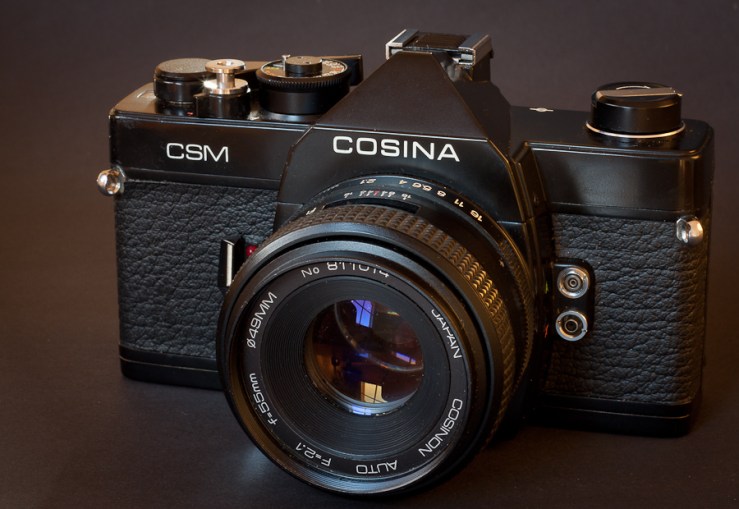
  • Camera: Cosina CSM
  • Lens: Cosinon 55mm f/2.1
  • Film: Fomapan ISO100, 36
  • Developer: Kodak D76
  • Scanner: Canoscan 9900F
  • Period: 2012 Jan-Feb

Morning at the river

We are living very close to the biggest river of Hungary (Danube) and I like so much to have a walk early morning (before work) at the side of it. There is a tiny island I used to visit because it is really quite and peaceful at the mornings especially at this cold part of the year. You can hear an army of birds using twitter though. These shoots were taken on an extremely cold day at the temperature around -20 degrees Celsius.

Afternoon downtown

The place we live in is a quite lovely little town with a great history which I don’t even try to introduce here. It almost all the year filled with tourists and their cameras. Seriously, I could start the local …camerastyle.com site focusing on tourists’ equipment. (I do love these sites: tokyocamerastyle.com, saopaulocamerastyle, csmcamerastyle) Anyhow there are tremendous amount of photos  taken about the town every day so I don’t really feel like to shoot there as much. Still I always find a little detail worth to capture.

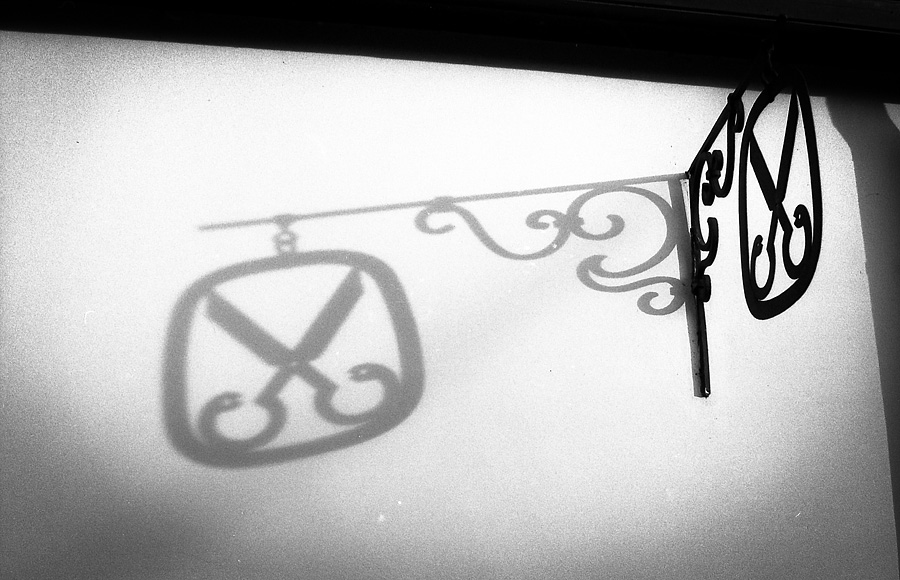
Business plate made of shadow 1.
Business plate made of shadow 2.
11

 Bus stops

Bus stops are great contrast against the downtown, they are regularly dirty, covered by graffiti and offensive adverts about products I will never buy (because I spend all my money on film of course).   These are places used by everyone but seemingly belongs to nobody and therefore nobody really cares the way they look like.

Cosina CSM, Cosinon 55mm f/2.1, Fomapan 100, Kodak D76

This photo is digital, taken with my Ricoh GR Digital camera. Please consider it as a “making of” photo.

Sunbath

Cosina CSM, Cosinon 55mm f/2.1, Fomapan 100, Kodak D76

Portraits round 2

My last post about portraits (Portraits round 1) featured black and white photographs. Black and white often help simplify things by skipping the colors and thus resulting in a cleaner image focused more on geometry, composition, and effects of light and shadows. Many times this monochromatic approach emphasizes important properties which would have been otherwise overwhelmed by the chaotic world of colors and can be greatly beneficial. While I love the more abstract nature of the B&W images, I also admire the emotional power of the colors. Sometimes a photo just works better in color.

I am quite fed up with the long, cold and dark winter here so now I am starting to see and use some colors.  Besides this post is a post about portraiture it is a small celebration of colors hoping that spring will come soon.

Unfortunately, I had less time to take pictures recently, therefore this selection is composed of my old works exclusively. The photos are taken in many different locations and seasons using various films and lenses but with the same old Pentacon Six of mine.

Color negative film

If you want to take portraits in color, negative film is probably the best choice. It is usually less prone to exposure issues than positive (dia) film so it can accept slight over or underexposure without serious problems on the final image. Also, these films are not as contrasty and vivid as most positive films (except Kodak Ektar which I have never tried so far) so the images are smoother and it is often a good point in the case of general portraits.

It is also very easy to make black and white images out of a color version so you have the flexibility to change your mind during post-processing.

E (Gyöngyös, Hungary), Pentacon Six TL, Biometar 80mm, Fuji Reala 100, Cannoscan 9900F
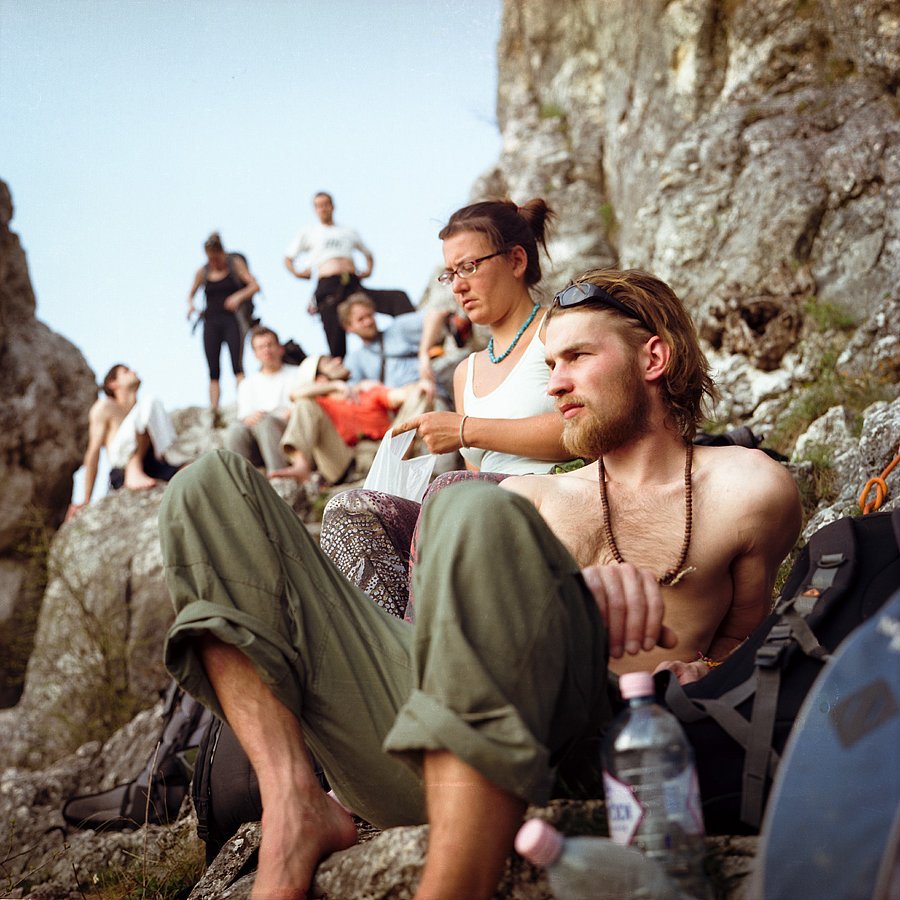
L (Pilis mountains, Hungary), Pentacon Six TL, Biometar 120mm, Kodak Portra 160NC, Cannoscan 9900F
(Pilis mountains, Hungary), Pentacon Six TL, Biometar 120mm, Kodak Portra 160NC, Cannoscan 9900F
Szöszi (Gyöngyös, Hungary), Pentacon Six TL, Biometar 80mm, Kodak Portra 160 NC , Cannoscan 9900F
Kutyi (Gyöngyös, Hungary), Pentacon Six TL, Biometar 80mm, Kodak Portra 160 NC , Cannoscan 9900F

Color positive (dia) film

Positive films are generally recommended for natural product and architectural shoots. At least this is what I have heard a lot. But of course many uses dia film for portraits as well. For example, the famous photographer Steve McCurry used to shoot on positive film and took fabulous portraits like the Afghan Girl.

I personally like to use these films for portraits because of the character and the fact that they have the finest grain ever. But this is true that lights and shadows have more contrast, the exposure must be bloody accurate and overall you have to be very precise to achieve a good result. In addition, it is not too easy to find a lab where you can get it developed especially if you shoot medium format or bigger.

At the bottom line, I think it is still worth to shoot positive films regardless of the subject because the view of the developed dia film makes you happy as a kid at Christmas for sure. You get the final (not inverted) image. Because it gets visible by the light passing through the film rather than reflecting it. That is why dia has a huge dynamic range which makes the experience (in my opinion) kind of better than reality.

L (Budapest, Hungary), Pentacon Six TL, Biometar 80mm, Fuji Velvia 100 , Cannoscan 9900F
Self (Girona, Catalonia), Pentacon Six TL, Biometar 80mm, Fuji Velvia 100 , Cannoscan 9900F
M (Hatvan, Hungary), Pentacon Six TL, Biometar 80mm, Kodak Ektachrome 100 , Cannoscan 9900F

Cosina CSM

Cosina

Cosina is not a well-known trademark among camera manufacturers, at least I have never heard of it before I got this camera. The fact is, this is an existing company which has produced over its history many truly nice cameras under their own name and surprisingly for many mainstream manufacturers like Rollei, Canon, Nikon, Yashica, Olympus, Epson etc.

They are manufacturing the Zeiss Ikon camera bodies and many Leica mount Zeiss lenses today. Also, Cosina is the owner of the brand and the company behind Voigtländer which represents a high standard of quality cameras and lenses indeed. All in all the name Cosina might not ring a bell, but it is almost 100% that they have built one of your favorites and they know how to design and build solid photographic tools by tradition.

Technical details

Datasheet

  • Produced 1978 (?)
  • Film type 135 (35mm)
  • Weight 540g (without lens)
  • Dimensions  136.5 (w) x 83.2 (h) x51 (d)
  • Standard Lens Cosinon 55mm f/2.1
  • Lens mount M42 screw mount
  • Shutter cloth curtain (traveling horizontally), electronically controlled
  • Shutter speeds 4s, 2s, 1s, 1/2s, 1/4s, 1/8s, 1/15, 1/30s, 1/60s, 1/125s, 1/250s, 1/500s,1/100s, M, B
  • Sync speed 1/60
  • Viewfinder SLR w/coated window, micro-raster ring with split image aid
  • Exposure meter stop-down CdS TTL w/3 led lights, activated by the half-pressed shutter
  • Batteries   2x SR/LR44 or similar (AG13, A76)
  • Self-timer
  • Hot shoe, PC sync connection
  • Optional auto-exposure motor

This camera is very small and light especially with the kit lens. Not as small as the Olympus OM, but close to it (540g vs 510g). This is one of the main reasons I own one.

The body is well built, but it is plastic at the top plate and definitely not as solid as a professional camera. In fact, this is all right for me because I use it for amateur purposes with great care. This is a really cheap camera and I suppose it was never a prestige product.

The shutter is controlled electronically, but it is working without batteries with the shutter speed of 1/60 of a second. The light-meter is center weighted, using 3 little LEDs in the viewfinder for readout and I have no complains so far.

The batteries are small, cheap and lasting for years (for me) and as I said you are not completely left on the side of the road if they ran out of power. The camera will work on a level (no metering, no self-timer, only 1 shutter speed).

Crazy accessory

The craziest thing about this camera is that it had an external auto exposure unit. It had to be mounted into the accessory shoe and wire it to the camera with some cables and plugs. It contained a motor which turned the shutter speed dial according to the values came from the light meter. Thus it featured aperture priority auto mode. Because the lens was not coupled with this device it had to be stopped down for metering.

It sounds very awkward to me, but it worked. I haven’t got this module but thanks to Jake Howe who was kind enough to allow me to use his photo, I can finally show the camera with the full-featured auto exposure unit.

https://www.flickr.com/photos/gmjhowe/14153615784/sizes/l

Cosina CSM with auto shutter mechanism by Jake Howe

My Cosina CSM

This is really small indeed

Nowadays everybody is obsessed by the small size great capabilities cameras (thinking of the mirror-less madness) and it was not really different at any point of the time. Miniaturization was always a trend.

People from the country of the rising sun has created many very compact, yet capable SLR legends mainly in the 70s like the Olympus OM series. Actually these cameras are not much bigger than some mirror-less digital camera of the modern era, even though they use “full frame” size film and having a full mirror mechanism and usually, a huge and bright viewfinder especially compare to entry-level DSLRs.

As I love the design and style of these film cameras, I would rather get excited by a conventional mirror-based DSLR with a “full frame” sensor, but in a compact body than anything else.

I know there are technical issues and probably it would be damn expensive, yet I hope someone will eventually come up with such a device.

If it was possible to squeeze the mirror, prism and in addition a roll of film into such a small camera, it seems unreasonable to not being able to do it with a digital sensor just like Leica did with the M9.

How did I get it

Back to my story, I always wanted a compact size SLR with a nice viewfinder and with an M42 screw lens-mount.

I have many nice M42 lenses and it is always good to have a lighter alternative to the serious workhorse for casual shooting. But I had no idea which camera would be the best. Until one day, I have found a little shop of an old camera repairman in a small village, where among many cool classics I have seen a camera called Porst Compact-reflex. As I took it from the shelf and looked through the viewfinder I knew it was an exact match to my requirements.

I have found it a bit too expensive (at least according to my possibilities at the time, as I was a student) so I did not buy it.

After some research, I have figured out, that it was actually a COSINA CSM branded as Porst (a German photographic equipment distributor and retailer company). The next day I have purchased an instance on e-bay for a little less money and with an extra ever-ready-case.

The truth is, I could have gone for the PROST as my camera had some mechanical troubles and the repairing dismissed the price difference eventually.

Since then I had many great times with this little Cosina and it is certain that I will load some film into it time to time.

The way it looks

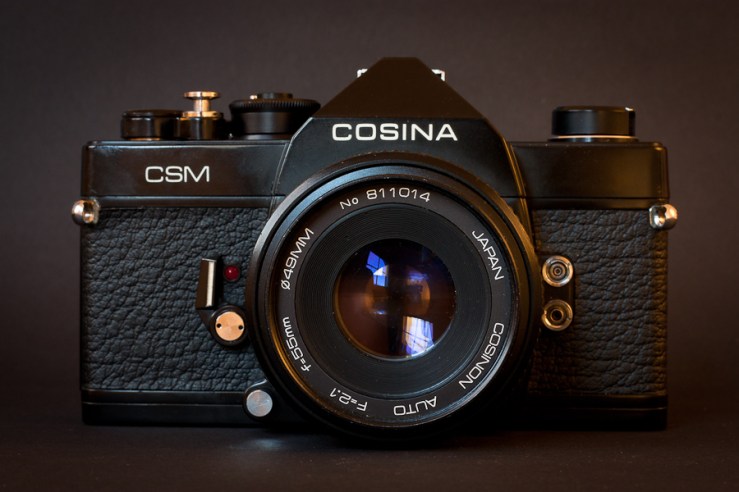
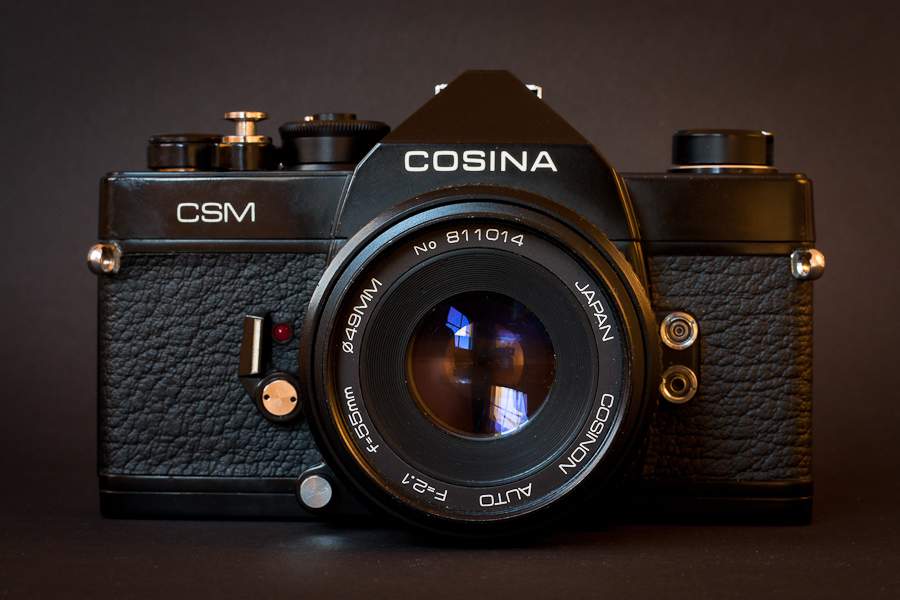
I have to say, it is not an easy task to take a good photo of such a black object with white and shiny chrome parts.

This setup includes a window (key light), a cheap lantern from Ikea with an economical light-bulb (fill-light and color) and a sheet of black paper (background). Oh, and I tried to use a silver reflector which was used in a windshield of the car against overheating issues in its previous life. But this reflector does not work very well.

The button below the self-timer is used to re-open the aperture blades after you stopped down the lens to meter. It could be needed when you change your mind and need to re-focus or frame, so the viewfinder brights up again.

The two plugs on the other side are for the optional auto-exposure unit.

You can lock the shutter release button. This is great to prevent accidental shoots and mark that you have actually cocked the camera, on the other hand, it can be a problem when you can’t fire it in the big moment…

Repairs

Film advance mechanism

When I have received the package form the UK, I had to realize that the film advance mechanism was not quite working. I got it fixed quickly and I received the instruction I need to advance the film with care. I do and I had no problems with it during the last couple of years.

Light-seals

The light-seals needed to be replaced as it is normal for a camera this age. It has to be said however that even without this fix there were no issues of light-leaks.

Advantages

  • Small and light
  • M42 mount (huge variety of cheap high-quality lenses)
  • Works without batteries
  • Nice viewfinder with the effective focusing aid
  • Extremely cheap

Disadvantages

  • Bit plastic (but still feels right)
  • It needs batteries
  • No mirror lookup (it is not a pro camera though)

Recommendation

The Cosina CSM or it’s siblings can be a good choice to anyone who is looking for a compact film SLR with manual focus and having nice M42 mount lenses. It is cheap, it is easy to focus with and won’t break your neck carrying around all times.

Links

Sample Shots

It has been over repeated that the lens and the film are much more important factors than the camera body itself, but this is now a tradition to post some shots taken with the reviewed camera (3rd post already).

You can find some shoots with the unique f2.1 kit lens, which might be interesting. Personally, I think this is a nice optics in a very compact package. My other 50mm lenses are much bigger.

Light bulbs showcase, Cosina CSM, Pancolar 80mm f/1.8, Fuji superia, Cannoscan 9900F
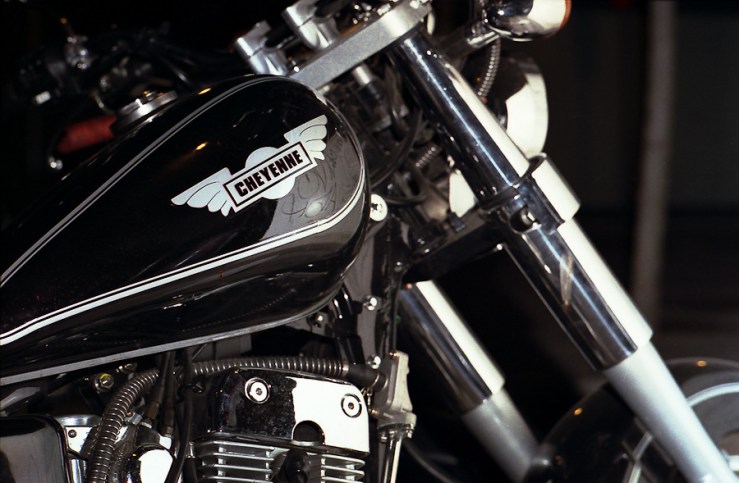
Bike, (night-street shoot), Cosina CSM, Cosinon 55mm f2.1, Fuji superia, Cannosacan 9900F
Rent a bike, Cosina CSM, Cosinon 55mm, Fuji superia, Cannoscan 9900F
Nico (Girona, Catalonia), Cosina CSM, CZJ Pancolar 80mm, Fuji superia, Cannoscan 9900F

Portraits round 1

Portraiture

Portraiture is a very exciting branch of photography probably because of its subject. It is indeed a very ancient and natural thing to depict our fellowman. Therefore an enormous amount of portraits has been created over history and especially nowadays.

Most likely this is the reason why portraiture is not easy to do well, fortunately, all of us genetically attracted to faces. People are hard-coded to recognize human faces virtually everywhere and in anything even if there are only a few random craters and some shadows on the surface of a dead planet.

I also do love good portraits, and I am generally taking a lot as well. Unfortunately, I am not as good as I wish to be.

It is rather hard to catch the moment of emotion in the right composition among proper lights to get a really special portrait. In addition, as it is an interactive process you have to be connected to the other human-being on a level which is challenging and exciting at the same time.

This is overall very rewarding for me and I am going to keep shooting portraits for sure, hopefully on a higher and higher level.

I was planning to post some of my portraits here for a long time ago, but on the other hand, I decided to push myself to publish new works as much as possible.

Finally, the time has come and I have developed a few rolls of film a few days ago. So now I have some new photos which I will mix up with a few not so new ones.

The recent shoots caused a quite a bit of excitement because as always everything was experimental. I have tested a new focusing screen in my Pentacon Six as well as 2 new types of film (Fuji Across 100, Lomo Lady Gray 400) and this was the first time I used Kodak D76 developer.

It turned out all good, however, there were lessons to learn again.

Some new shoots

Nico (Girona, Spain), Pentacon Six, Biometar 80mm, Fuji Across 100, Kodak D76, Cannoscan 9900F
SavE (Girona, Spain) Pentacon Six, Biometar 80mm,  Fuji Across 100, Kodak D76, Cannoscan 9900F
Paolo (Prato, Italy) Pentacon Six, Biometar 80, Fuji Across 100, Kodak D76, Cannoscan 9900F
Hunor and Tibor (Szentendre, Hungary), Pentacon Six, Biometar 80mm, Lomo Lady Gray 400, Kodak D76, Cannoscan 9900F

Some not so new shoots

These two pictures were among those I shoot on my first few rolls and developed myself around 2007-2008.  The guy was my roommate during the university and these were taken in our kitchen next to a big window.

By the way, he is also a photographer and shooting film too from time to time. He is the founder of a really nice blog called 100ASA.

Holló (Miskolc, Hungary), Zenit E, Helios 44, Forte 100, Forte developer, Cannoscan 9900F
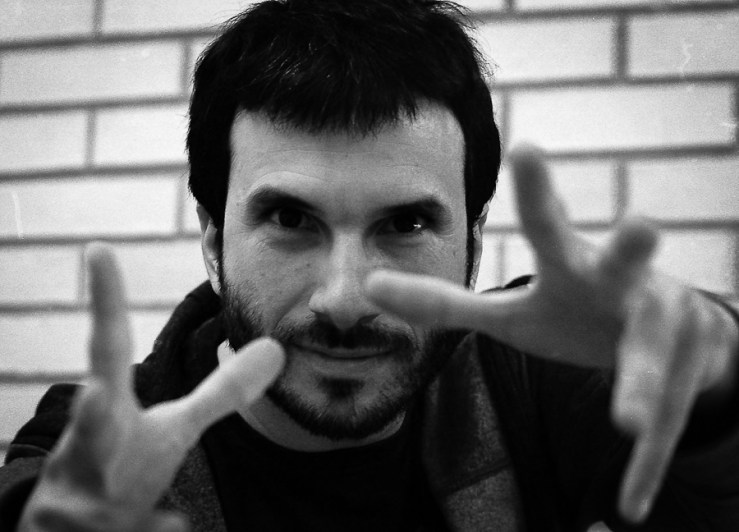
Gabi (Gyöngyössolymos, Hungary), Cosina CSM, Cosinon 55mm, Forte 100, Cannoscan 9900F

Final words

Naturally there are many more portraits in my collection which deserve a frame in this blog and certainly many will show up. I only need to find the occasion and the context to merge them with recent works and publish. But hey this is only the round 1. I hope some of these cached your eye.

Kiev-4

The Kiev-4 -according to my opinion- is an extremely outstanding camera. It has a fascinating history, an extraordinary construction, a very attractive outfit and on top of all these, it is still a very capable performer if you don’t mind to shoot in full manual.

Datasheet

  • Produced 1947-1987 Arsenal, Kiev, Ukraine reference
  • Film type 135 (35mm)
  • Picture size 24 x 36mm
  • Weight 27.2oz (771.1g) with Jupiter-8 (“white”)
  • Lens Jupiter-8 (Arsenal copy of Zeiss Sonnar) 50mm 1:2.0
  • Focal range .9m to infinity
  • Shutter metal curtain (traveling vertically)
  • Shutter speeds 1-1/25s, 1/50s, 1/100s, 1/250s, 1/500s, 1/1250s + B
  • Viewfinder coupled rangefinder
  • Exposure meter uncoupled selenium cell
  • Self-timer
  • Accessory shoe, PC sync connection

History

As I have already mentioned this camera has a very interesting history which you’ve probably heard of. I am not the biggest expert of this story, therefore I don’t even try to reveal every twists and detail, but I do try to make a good summary of the research I have done.

Surprisingly it is more a German camera than a Soviet, but most importantly it is not a plagiarism of the Contax but it is a legal replica. But how it is possible?

After World War II. the Soviets acquired the Zeiss Contax II and III from Germany as part of war reparations. They got everything, machines, technologies, spare parts, and key personnel as well. That is why the first Kievs have original Contax parts and eventually, most of these cameras were made on the very same machines.

After some pilot production series, the production lines were set up in Kiev, Ukraine in the Arsenal factory. Even though the production was based on local workers, the technical coordination was done by a small group of German professionals, most notably Wolfgang Hahn.

Despite the initial lack of trained personnel, the fact that the entire production line was moved and the high pressure to produce cameras in very big quantities, the Kiev is a very well built camera (The design itself is very fault tolerant). It is in fact much closer to the original Contax in quality than any other Soviet cameras especially early models were very high quality.

It has to be said that there were significant drops in quality as the camera was simplified in the sake of productivity and as the members of the original crew went retired. Therefore if you intend to buy a Kiev camera, the older is the better (before 1970 if possible).

All in all the original design from the 1930’s is so rigid that despite the circumstances the Kiev cameras was based on it during many decades until 1987.

If you want to read more about the history with way more details, I can recommend to check out this site.

My Kiev-4

My Kiev-4 is made in 1965 and sold (first) in 1966 in Budapest for 2400 HUF – 500 HUF discount (for unknown reason) which was a ridiculously high price at the time (I will figure out how to convert it to today’s values).   Hungary was a  part of the Eastern block and there was only 1 company which sold photographic equipment in the country called Ofotért. The funny part is, I have got a catalog of this company from 1979 and this camera was still listed for 2140 HUF.

The warranty was 1 year and the camera is still working! I have the original box, invoice, warranty, lens caps, ever-ready case and the camera itself with a Jupiter-8M lens. The M stands for the feature that the aperture values click as you change them (quite advanced technology).

How did I get it

I always wanted a usable and good looking rangefinder. I usually don’t demand much in terms of usability as I am a camera addict, so what I really wanted can be summarized as accurate shutter speeds, interchangeable lenses and a viewfinder which is combined with the rangefinder and bright/big enough to let me enjoy the rangefinder characteristics.  My other concern was of course price because a Leica or even an original Contax is way out of my scope.

I did not know too much about the Kiev until one day I have found one in a very good shape (almost mint condition) on a Hungarian auction site, similar to eBay. The camera was listed with the excellent Zeiss Sonar copy Jupiter-8M lens, the original box, and documents including the original warranty, which is, of course, had expired way before I was even born. It was so attractive that I couldn’t resist. After a few hours of research, I decided to buy it and I haven’t regretted my decision so far.  The whole package cost me 14.000 HUF. If there was no inflation some could think the camera actually gained some value, but in fact, it is now below 50€ at the time of writing and I think it is extremely low for such a beauty.

The way it looks

Personal experience

Shutter

It has a metal vertical traveling shutter. Both vertical and metal are rare if not nonexistent at this era of FSU (Former Soviet Union) cameras. With the vertical movement, the shutter needs to travel a shorter distance as the frame is (24 x 36mm) and thus higher shutter speeds are available. 1/1250 of a second is indeed a short amount of time, and my camera is still able to produce it. The metal part doesn’t make much difference, however, it will certainly not tear or puncture easily compare to a canvas material.

It is worth to note, that you have to advance the film before changing shutter speed because you might cause some trouble and your settings could be inaccurate. If you want to know why to visit this site.

In my experience, the shutter is very quiet, maybe not as quiet as a Leica as some would claim. But it is quite enough to be able to take street shots in a very discrete way.

Viewfinder and focusing

The viewfinder fits the view of the standard 50mm lens and it is large and bright compare to my other FSU rangefinders  (the collection is not complete though). It is true that it could be brighter and it has some greenish color casting. I think it is probably because it is used to increase the contrast between the small internal and the bigger external frame of the viewfinder to aid focusing. It is still very usable, but I could wish brighter among dim conditions.

It is combined with the rangefinder,  you can use the same window to compose and make your subject sharp. If you want to read more about how the rangefinder device works, visit this site in general, and this site specifically to Kiev-4.

Personally, I think the viewfinder is very usable for a camera this old. All of my shoots so far were spot on. This is way better than my average focusing results with manual SLRs without a Fresnel type split screen.

The focusing is especially accurate because the two windows of the rangefinder have an unusually big distance between each other. This and the small focusing wheel on the body makes focusing extremely precise.

As a downside, it is very easy to hold a camera in a way that one of the rangefinder windows are covered by hand thus compromise it. Therefore the proper holding is a bit aardvark and called the “Contaxt hold”.

Keep your index finger on the shutter release, your middle finger on the focussing wheel and the other two below the RF window and you’ll be fine! (Tobi’s camera page)

This is something that you get used to it or you will hate this camera forever. For me, it is not a big price to pay for the accurate focusing at all.

Metering

This version of the camera has a built-in selenium cell meter at the top plate while the Kiev-4A is the same camera but without the meter. I think the no-meter version is more stylish and in addition, these light-meters are generally inaccurate nowadays. It is still working (no battery needed), but it is not reliable plus the difference is according to a non-linear function, thus it cannot be easily corrected. Making it worst the film-speed scale is GOST instead of ISO or DIN. This is not a big issue if you carry a convertion table or you stick to one film speed only, but inconvenient for sure.

That is why I have to use an external light-meter or a digital camera to measure the light. I know it sounds tricky, but most of my cameras have no meter at all,  plus many great photographers could live with this limitation just fine before us.

Film loading and advance

You have to remove the back plate in order to load the film. This is not too special, but you need to get used to it.

Advancing a film is done by rotating a knob at the top plate instead of having a fast-advance-lever. Again this is not really ergonomic, but you can accept it unless you shooting fast actions.

Winding back the film is a similar experience, but you need to hold a button located at the bottom of the camera. In fact, this is the part I dislike the most about this camera because the rewind knob is very small compared to the force you have to apply. It doesn’t mean you had to force it badly! If you feel something needs to be forced, better not to do it because the film and the camera are both very sensitive instruments.

The lens

According to Camerapedia “The Jupiter-8 (sometimes marked in Cyrillic, ЮПИТЕР-8) is a postwar Soviet copy of the prewar Zeiss Sonnar 50mm f/2 for the Contax, built with six elements in three groups. It was made in Contax and M39 mounts, both for rangefinder cameras. “

The lens has a big reputation of being sharp, fast, with a good contrast and a nice bokeh (quality of out of focus elements), but it is prone to internal reflections by direct sunlight hitting the lens. I can confirm all these and yes, it is much better if you are having a lens-hood (5€). The lens is a bit soft wide open, but this is not unusual. You just need to stop down a bit and you will get pin sharp results.  On the other hand, the lens has a very pleasing character, which can be revealed best wide open and I think it is great for portraits.

It is true that the quality of your lens highly relies on how lucky you are because the quality control was not the best in that part of the world. Generally speaking the older the lens is the better with the notion that the coated versions are preferable.

The body itself supports a wide variety of lenses. It has the standard Contax bayonet (in fact 2 bayonets inner, outer), so all Contax and Kiev lenses are accepted plus there are Japanese lenses available -Nikon and  Canon also made cameras with this mount, but those might be not fully compatible because of the differences in the film distance.

For lenses different from the standard 50mm focal length you need to use an external viewfinder.

Final words

I am very happy with this camera. It looks great and as you can see in the sample photos it can produce very good results (in my opinion). I sent some photos to the original owner of the camera, and he was also surprised, how well it perform for me.

It is indeed not as easy to use, but it gives you a very unique feeling of using something really special, and you are taking pictures in the same fashion as photographers were doing 60 years ago.

In fact, this is one big thing I really like in film photography. You can use the equipment of the elders, yet as you put a modern film in it, you can achieve state of the art results.

I recommend it to anyone who likes the way around and doesn’t mind to learn the “Contax hold”. It is not a big investment but can give so much fun and works perfectly on the exhibition cabinet as well.

Links

Test shoots

Stupa (gold and blue)

stupa_4395281485_o

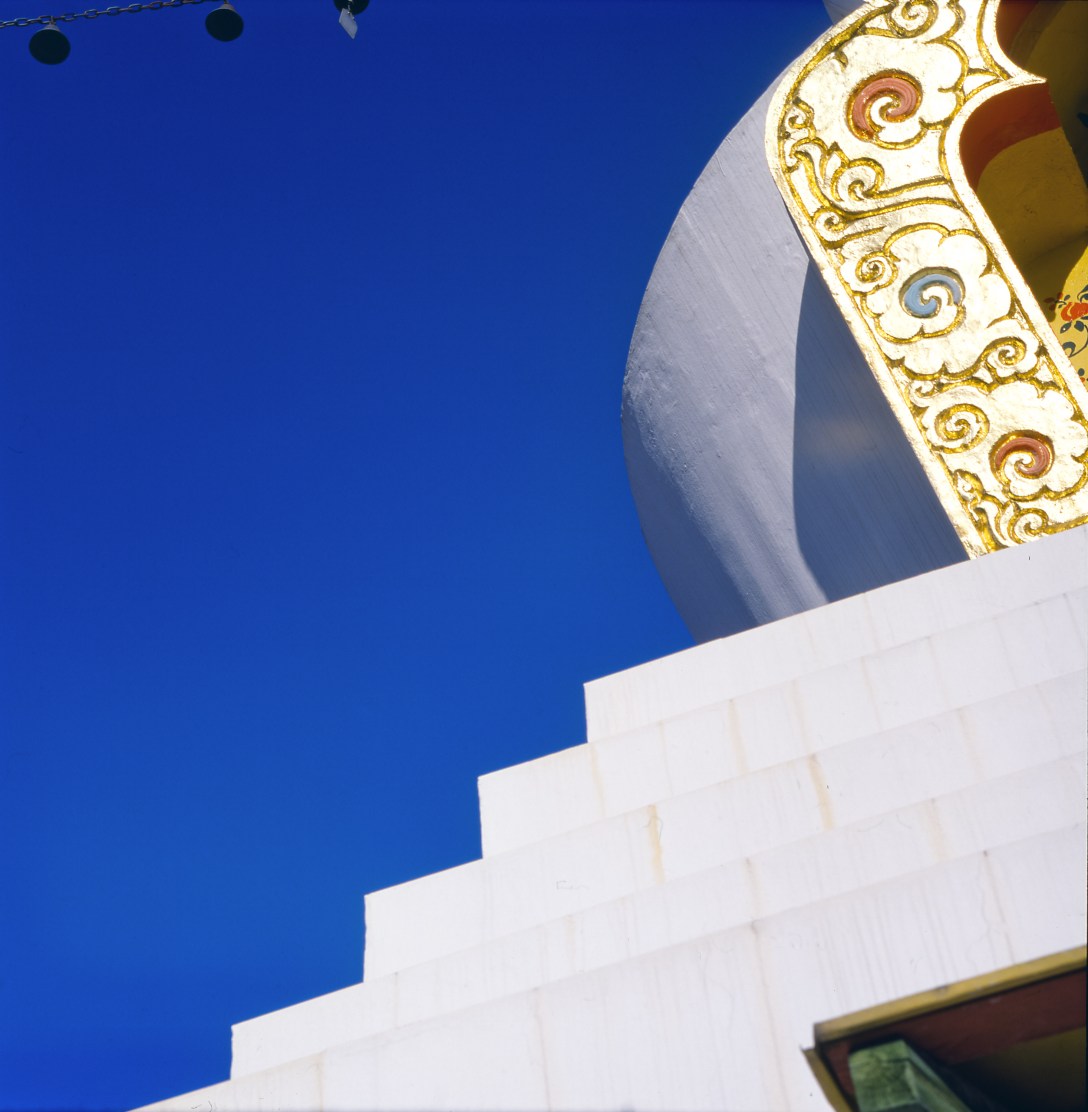
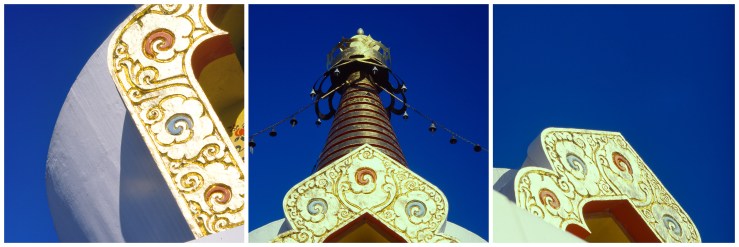
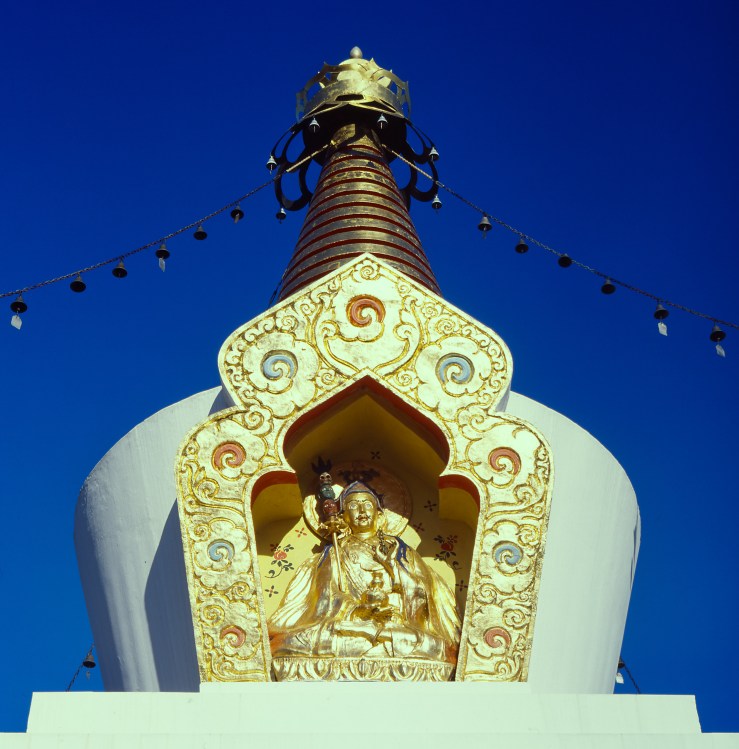
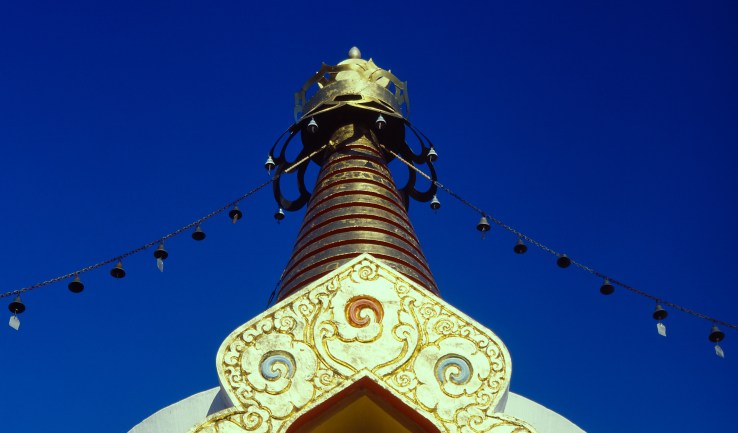
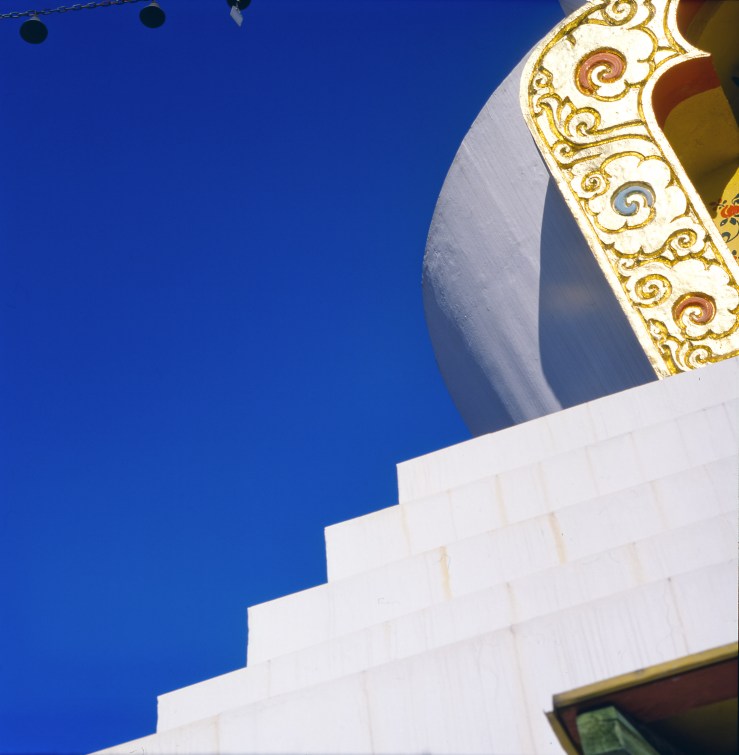
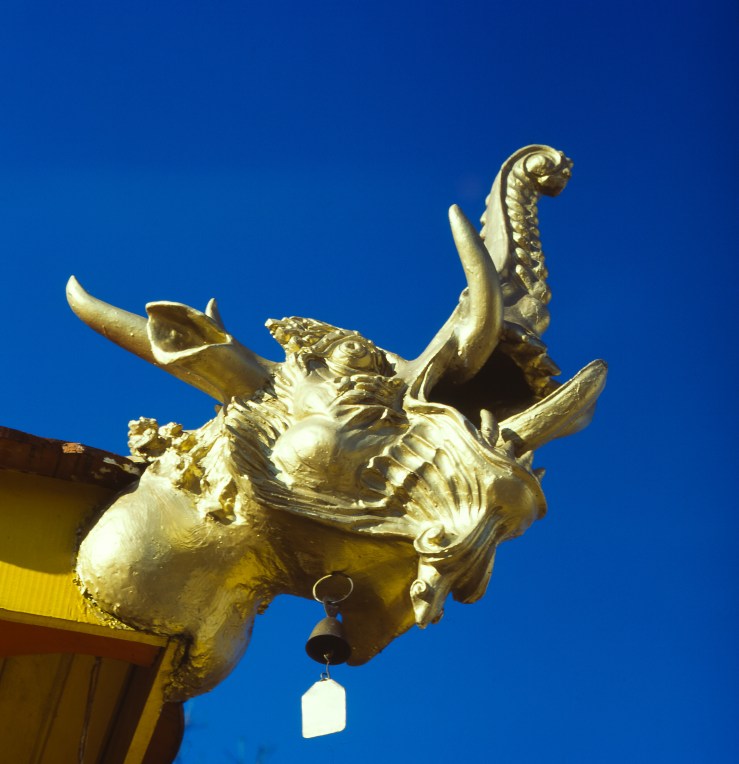
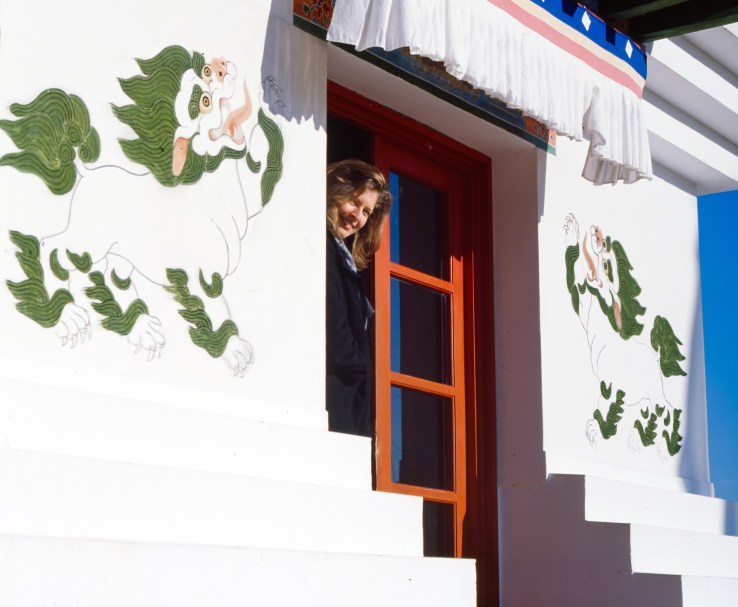
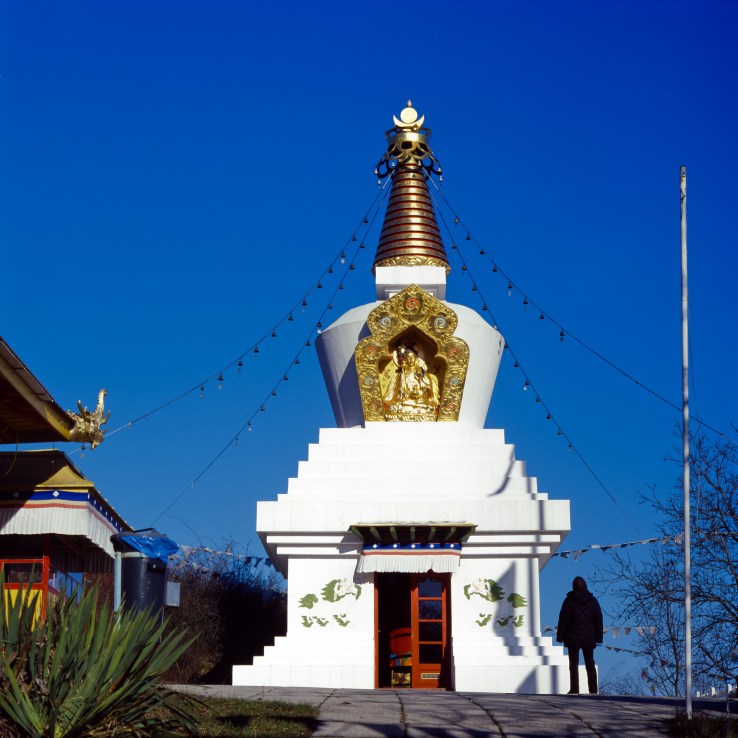
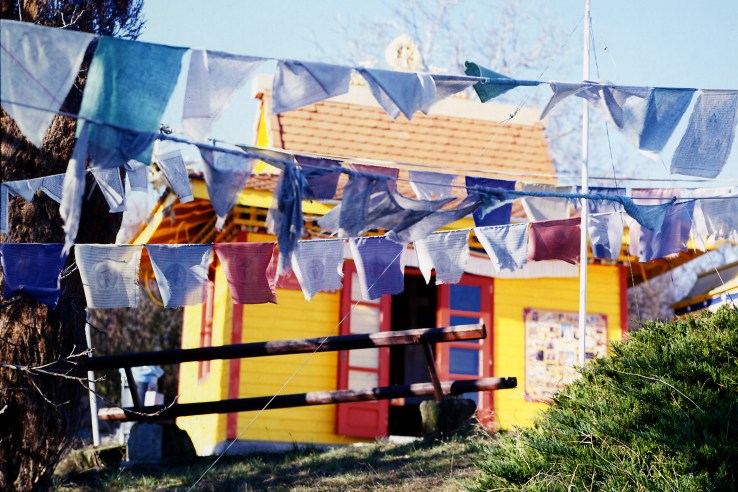
These photos were taken last year around January. The place is close to the village Tar, Hungary. This stupa is called “Béke” (peace) stupa and built in-memorial of Kőrösi Csoma Sándor, also known as Alexander Csoma de Kőrös.

According to Wikipedia he was a Hungarian philologist and orientalist, author of the first Tibetan-English dictionary and grammar book. He was born in Kőrös, Grand Principality of Transylvania (today Chiuruş, Romania).

Anyway, I am probably not the right person to describe this sight historically neither theologically, but it was a wonderful experience and we could really smell a special religious atmosphere.
There were a Fantastic sunshine and clear deep blue sky although the air was a bit chilly plus, of course, the stupa which indeed looks extraordinary. I hope the photos will explain better what do I mean.

If I made you interested in this stupa, have a look at this link.

Gear

I used my Pentacon Six TL and most likely the standard 80mm f/2.8 Biometar and some Kodak Ektachrome 100 slide film. This was my first and so far only trial on this film. I would love to get some more of it though. I have used my Ricoh GR Digital digital compact as light-meter.

Photos

Kőrösi Csoma Sándor emlékpart Tar

Kőrösi Csoma Sándor emlékpart Tar

Kőrösi Csoma Sándor emlékpart Tar

Kőrösi Csoma Sándor emlékpart Tar

Kőrösi Csoma Sándor emlékpart Tar

Kőrösi Csoma Sándor emlékpart Tar

4393512078_31c2648b15_o

Kőrösi Csoma Sándor emlékpart Tar

Rotten time-capsule

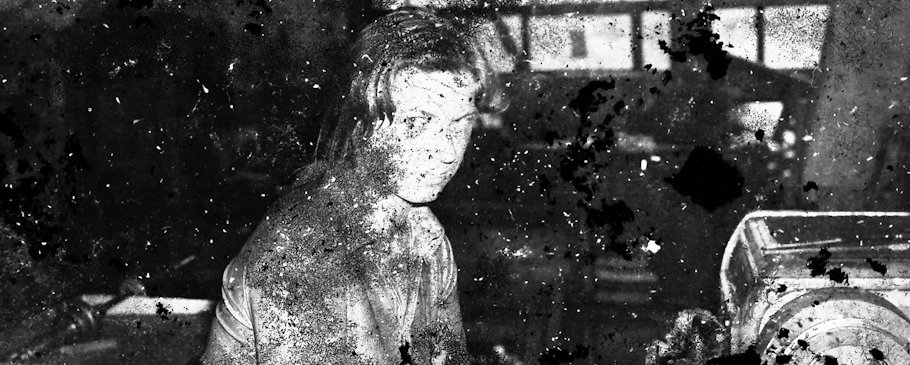
She could have been an actor in a zombie movie.

Last weekend I have found some forgotten rolls in a basement we rent and used to be a kind of fallout shelter under a Soviet-type blockhouse.

Even though it was intended to be sheltered at the time of bombing the place was used as community club rooms and workshops for various groups like radio amateurs and people who built small airplanes and other models. This has ended as the Soviet Union crashed and Hungary transformed into a capitalist structure and so the governmental support of these activities canceled. Since then we used this basement as storage, and as we moved to a smaller flat we had to store things which we shouldn’t have there due to the lack of room.

Unfortunately, some very “clever” guys broke in a few years and destroy everything which was fragile and stole everything which they thought was worth for. Therefore many things including these few rolls of film were forgotten. Time to time we go down and try to clean up the place as we don’t want to keep it longer. And this is how I found some film in this dirty and wet place.

This basement is a really special for me, lots of memories and full with retro stuff. Huge iron doors, old electron-pipe based radios,  even older posters about girls and movies on the walls from the  70s and all of these covered with a thick layer of dust and spider-nets. Some posters are funny, others hold messages of the propaganda of that time. So this is really a kind of time-capsule for me with a very special atmosphere.

Apart from the obvious signs of destruction done by the “clever” guys and time some water pipes got leaked that’s why we had to deal with a lot of moisture in there. I can tell you moisture and dust is not really ideal for keeping your negatives safe. As it turned out the emulsion was completely eaten by some fungus and the pictures can be easily washed down and lost by any attempt of cleaning. Therefore most of the pictures are completely ruined and those ones which I could finally scan are in pretty bad shape. Although I suppose some would like the unique look of them.

The rolls come from the late 70s as I found some film packaging with the note “process it before 1979” and my Father confirmed that it is highly possible.

All in all, it was a great fun to recover some pieces of history, especially because the pictures were taken by my father. I am trying to get background information of the usable scans so I may update this post. I hope you will also like some of the images.

Girls with a nice glass
Lathe machine in the background
Boy with a model airplane
Model airplane & Trabant 601
Model airplane and Zenit E SLR
Senior Camerajunky with camera
Speed model car
Litter from the 70s

Countryside

November is certainly not my favorite month, at least not in Hungary. I am not a huge fun of the cold muddy weather, short days and dying nature. Unless it is in a post apocalyptic SCIFI or zombie movie and I am in a warm comfortable place. But I have to admit sometimes this month could give us some really great atmospheres.

In Hungary lots of people have some small piece of field as a hobby garden where they produce vegetables, fruits during the summer or having grape for self produced wine. Unfortunately recently many of these small parcels are being abandoned and filled with weed. This is really a pitty in my opinion since the new generations will completely forget the knowledge and the joy of producing something like this. This is a strange feeling to see such places especially at this part of the year. So I toke the opportunity of having some sunshine and I tried to catch the combination of the abandoned gardens and the slowly dying vegetation of November preparing for the winter.
I have used the Yashica TL Super with the Hansa 35mm f/2.8 lens which came in kit with the Yashica and supposed to be an excellent glass. In fact it is really a nice lens, there is only some vignetting what I could mention. But since I like this effect I add some extra corner darkening and some more retro look. Also this was the first time when I tried the DM Paradise 400 film (first 2 images). I have to say, it is an affordable solution and has great colours when using around sunset. Being a relatively high speed film it is a bit grainy, but in exchange I could use it in interiors quite well. The photo with the gloves is on Fuji superia 200 which is my most used color film for the reason it is the easiest to get here.