Lomography Daguerreotype Achromat Art Lens

This article was a very long time in the pipeline. For one reason or another I always postponed it even though I promised to Thomas (who kindly lend me this lens) to write my opinion about it. It might be that I don’t really write about gear which I don’t particularly in love with.

The controversy

I have a love/meh relationship with Lomography. There are products which I absolutely love such as the LomoGraflock 4×5 Instax back and some of their film stocks. In general I am really happy that they are there, form a community and bring more diverse options to photography.
But on the other hand I am not interested in funky plastic toy like gear like Holgas. I totally get why they appeal to a lot of people, it is just not my cup of tea. And also I am outright allergic to cringy marketing.

The Achromat lens while being made of glass and metal by its very nature leans into the lo-fi category to me especially with the creatively shaped aperture inserts.

As for why the cringy marketing nerve was pushed for me? The massive decorative text on the barrel of the lens:

Daguerreotype Achromat
by Chevalier
a Paris 1839

Achromat simply means that the lens is designed to focus two colors at the same point exactly.
While this is true that such a lens design was used on the official Daguerreotype cameras in 1839, and that lens was created by Charles Chevalier, this lens is a very far relative to the original one.

Chevalier lens on Susse Frére Daguerreotype camera
Lens built by Charles Chevalier for the Susse Frères Daguerreotype camera.
image by liudmilanelson1x1
 (Image rights)

The original lens while had the same amount of lens elements and the placement of the aperture was similar was a very different beast. It had a much bigger image circle, the lens elements had different shapes and it was a lot slower. It was also nicknamed as the landscape lens.

By Paul Chin (paul1513); self created; a block diagram of the Chevalier Achromatic Landscape photographic camera lens. (Wikipedia)

In the end, I decided to give Lomography a break on this though as they clearly say that the lens is an Achromat inspired by the original design of Chevalier which is not wrong.

I had to reevaluate my feelings after I realized that the naming of the Lomo Petzval lens did not bother me at all. Could be that my judgment is tainted by the how much I actually like that lens….

So I had some baggage to unpack and process before I have even held the lens in my hands.
But let’s see how my opinion shifted after actually using the lens.

My setup

I used my mirrorless digital camera (Fujifilm XT2) with the Achromat. Initially I tested a simple adapter which allows mounting of Canon EOS mount lenses to my Fuji X camera. But because I wanted to experience as much of the image circle with all the lens character that comes with it, I decided to use my EOS to X focal length reducer aka speed-booster.

This setup allowed me to play with the lens very comfortably. Using a mirrorless digital camera means that I could stop down the lens while being able to still see a clear image in the viewfinder as the camera compensates for the darker lens by boosting the signal. Focus peaking and punch in focus was also really useful.
The speed-booster helped to combat the crop factor and made the lens a stop brighter while supposedly should not had made any change on the way the lens rendered.

The best setup would had been a native full frame camera with Live view + focus peaking and in body image stabilization. Of course any other setup would be fine including EOS film bodies, though the viewfinder can get really dark once stopped down to any usable aperture.

Image quality

The image quality of this lens is certainly a mixed bag. Wide open it is simply terrible, soft and full with all kinds of aberrations. There is no big surprise there, this is after all one of the simplest lens design imaginable.

Fig 1. Achromat
Barabás János-Dr. Gróh Gyula: A fényképezés kézikönyve 1956

What is quite interesting though is how much things improve by stopping down. Around f8 the images are kind of OK, but certainly usable with a touch of character.
It really is crazy how much can be achieved by such a primitive optical formula if moderate apertures are acceptable for the photographer.

Sharpness

Let’s not talk about it. From f11, it is usable. This is not a lens for critical high resolution use cases.

Flares

The lens is not particularly prone to flaring. Less glass-air surfaces means there are less opportunities for internal reflections. Still, it is possible to throw some rainbow flares into the mix. I am not sure if it has anything to do with the lens, the UV filter I used or perhaps the speedbooster played a role.

I like the soft gloomy effect here

Bokeh

An aspect which I like is the bokeh. The fewer glass elements also means that the background blur is really soft without onion rings, or any other madness produced by complex modern aspherical lenses. Especially in close focus scenarios the bokeh is really pleasing indeed.

I have not played too much with the different non spherical aperture inserts. I am sure they could be fun, but I was more focused on the “normal” image quality.

Conclusion

Without a doubt the Achromat is a special lens. It looks apart both from the distance and the images it produces are also recognizable. It is for sure a good conversation starter which can be very useful for street photography.

The lens is well built, no plastic involved and stopping down improves on the image quality dramatically which makes it usable as a normal lens. It is manual focus only, but on a mirrorless camera, nailing focus is not very hard.

Otherwise you can embrace the pictorial nature of the lens which is again something that stands out from the crowd.

Could be a painting


All in all, I think Lomography has achieved what they set out to do with this lens and I it has it’s audience. Am I part of this audience? Not really. While interesting, this lens is not something I would buy. In addition, the fact that I can borrow this lens from a friend any time I need it for a project also eases my urge to get one. I will probably try it again on film in the future.

It definitely raised my curiosity towards other Lomo lenses in the lineup such as the Petzval with it’s crazy swirly bokeh. Hopefully it will take less time to put together an article about that lens.

A second opinion

In order to get a more well rounded review, I have asked Thomas (the proud owner of the Achromat), to share some of his photos taken with this lens.

So far I only have the pictures and I know that he used a mid range film EOS body to take them. I may update the post with more details regarding film stock and maybe even with his thoughts about the lens.

Ilford Pan F 50, wide open

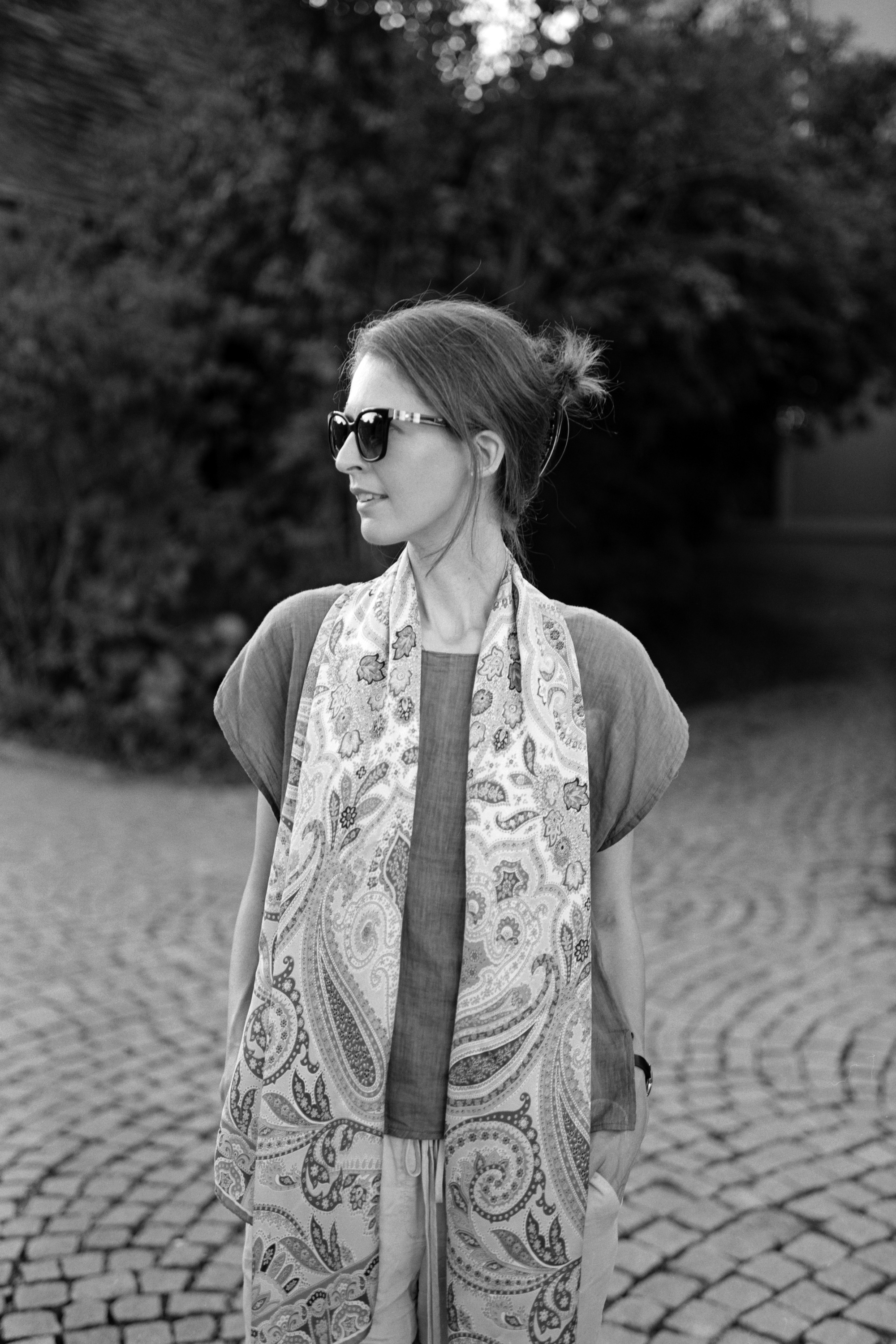
I really like this portrait. Even though it is very soft, potentially even out of focus, it successfully captures an expression.

Ilford Delta100, Lumière aperture plate 4,5

The funny highlights in the bokeh are not obvious upon first inspection, but they provide enough eye candy to move the viewers attention from the subject on a longer look. I think this gives a bit extra kick to this image. It is already a killer shot as it depicts a Cannonet camera.

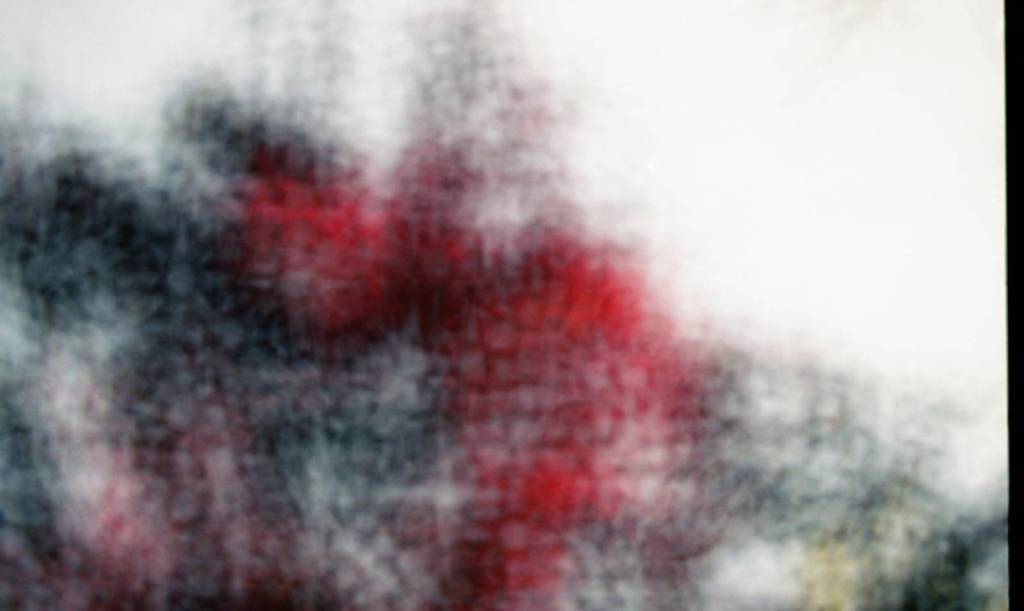
These abstract photographs are part of a four seasons series. Though to me a bit too far gone, it is hard to argue that they are unique. I have to admit that as a series they kind of work. These ones were shot on Kodak Ektar 100 using the Aquarelle Plates f6.3.

Expired Kodak Ektachrome slidefilm

And finally a psychedelic one. Not sure what is going on with the colors, but I can imagine that temperature control was deliberately sabotaged by Thomas during development for artistic effect. I would certainly consider this lens to produce cover art for goa trance albums.

You can find the work of Thomas here.

If I get more context or photos with this lens, I will update the article and I hope that you enjoyed this second set of pictures as much I did. If so, please drop a comment.

Further reading

If you like the Achromat design, I have an article about an old Hungarian box camera called Pajtas here. In case you were interested what can be achieved by a lens design with just 1 extra lens element, check out the article about a Trioplan.

Some other useful links:
1923

When we take photographs today especially on our phones we don’t consider them as historical documents. Photography is more ubiquitous than ever and for all likelihood our pictures will quietly rot away on a memory card or be deleted during routine maintenance in a dark corner of a nameless datacenter. Maybe they will become part of some AI as a minuscule fragment of the training set but never actually preserved. Besides who really thinks about mundane moments of life like a walk in the park with family as important in a historical context.

But when we take a random sample of 100 years of photographs, chances are that we found them quite interesting. 

Of course photography was much less common due to cost, availability of gear and materials and the level of skill needed to take good pictures. People must have thought a bit longer before committing to pressing the shutter. Less photos were taken but those which survived to the present day are more likely to hold something special. The good news is that the medium of film and especially glass plates are quite resilient if kept in reasonable conditions. They are more likely to survive than anything on a hard-drive even though the jury is still out regarding archivability of digital media.

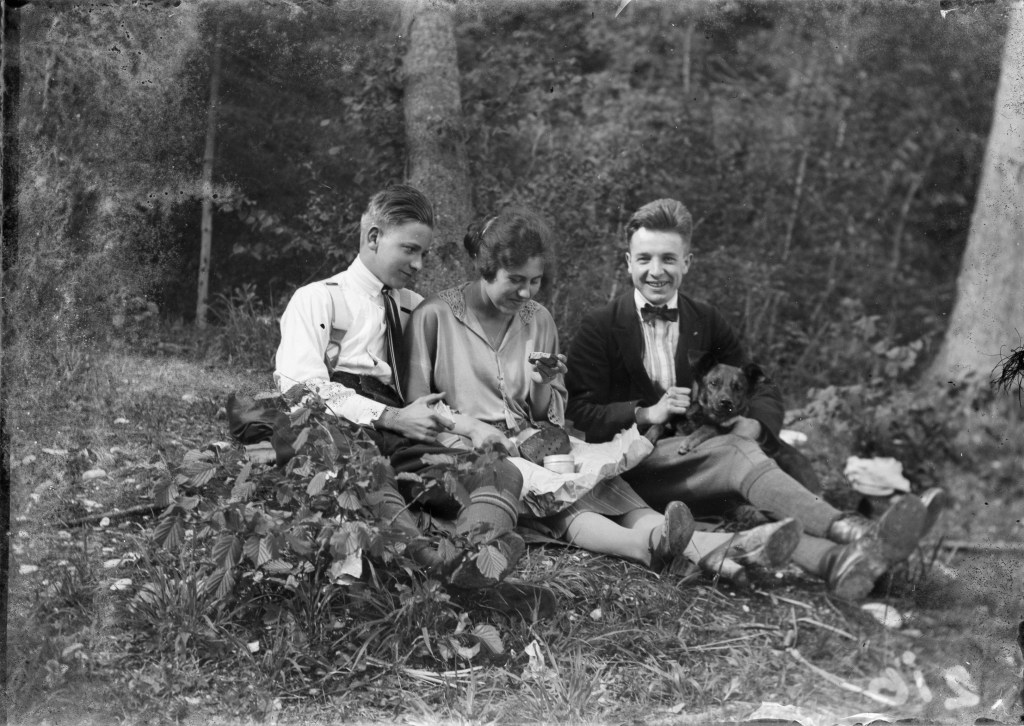
But I am already on a tangent, so let’s have a look at today’s subject which is a lot of 30 6x9cm glass-plates found by my father on a flohmarkt in Hungary.

Each of these photographs are stored in a paper sleeve with some text in German and the date 1923.

Such a find is always exciting to me. Not only that we can admire the quality of such old photographs, but we can get a glance into the past. Of course this is true with any photographs, but the fact that these are literally 100 years old and that the very silver on the glass witnessed these moments somehow makes the experience special.

I enjoy researching old photos and thankfully this time there are many leads to start on. On the paper sleeves there is the date of 1923 as well as the location. In some cases it is just the country, but other times the name of the city or a landmark. It is a bit hard to read the old style handwriting for me, but it seems that the photos are mostly from Germany (München, Herrenchiemsee) and somewhere from rural Hungary as well as a skiing at an unknown location.

The landmarks are easy to identify with the help of Google Image Search and it is real fun to check how these places look like today on Street View. In many cases there are archive photos can be found online from almost exact spots e.g.: feeding pigeons but from different years.

München

At Maximiliansbrücke I have fond a photo from almost the exact locations on Google Earth.

Postcard depicting Maximiliansbrücke from around the time its completion (1905). Source: Wikipedia

Herrenchiemsee

Herrenchiemsee is a complex of royal buildings on Herreninsel, the largest island in the Chiemsee lake, in southern BavariaGermany. Together with the neighbouring isle of Frauenchiemsee and the uninhabited Krautinsel, it forms the municipality of Chiemsee, located about 60 kilometres (37 mi) southeast of Munich.

Wikipedia

Hungary

To pinpoint exact locations is a lot harder for these pictures due to the lack of recognizable landmarks. But one sleeve has a text which I read as Csikéria, which is a small village at the south border of Hungary.

One thing is for sure, villages were a lot more different at the time as today. Parts of big cities with a bit of luck have survived largely unchanged the tides of the 20th century, but the rural world is quite a different story. The traditionally built houses made of adobe and covered with straw are gone a long time ago though they start to become fashionable again. There were hardly any infrastructure, only dirt roads, a well to take drinking water and a lonely telephone/power pole can be seen on the pictures. There are no automobiles seen apart from one example in München, but multiple horse carriages.

There is one picture with someone holding a newspaper with the title “A NÉP” (The Folk), but unfortunately there is not much more readable on it.

Clothing is another great source of information. For example there are a handful of pictures of a man wearing military uniform. The demarcations make it possible to identify nationality and rank. I will need to find some help regarding the identification, but it is likely to be a Hungarian uniform.

Skiing

The cross on the peak was/is very typical in the Alps, but it is not possible to tell where these photos were taken. I really enjoy looking at the details of their cloths, accessories such us glasses and pipe and skiing gear. No plastic can be seen here.

Trips and fun

Camera speculations

I would really love to know what camera/lens has been used to take these photos. We know that it took 6x9cm glass plates. It was released before 1923 and most likely by a European manufacturer. It is also likely that it was small and light enough to take it to adventures and shoot it handheld.

I imagine it mast have been a folder style camera from Voigtländer, Zeiss or from a similar brand. Like the Voigtländer Bergheil.

Minervator, CC BY-SA 4.0, via Wikimedia Commons

It might be able to guess the he camera model more accurately by the shape of the “film” gate and maybe based on the flare and bokeh characteristics of the lens, but for the time being I am only able to speculate.

Closing thoughts

There are many unknowns around these photographs. We don’t know who they are, if they were living in Hungary and had a chance to visit Germany or the other way around. We do not know what they did for the living. It is clear that they could afford nice cloths, activities such as skiing and not to mention photography.

There are recurring faces, but we have no idea if they were friends, family or anything else. One thing is sure, they were people trying to enjoy their lives in very turbulent times. The first World War was behind them, but they had to face a deep economic crisis and the next big war was just a few years ahead. In any case through these photos we got a little glance into their lives and we can reflect a bit about what has changed during 100 years.

My father told me that he may have some negatives left from the lot he bought. If I can get some more scanned or I manage to find out more about the pictures and there is interest, I may write a follow up to these post. If you’e found this interesting or you have some information (you recognise someone or a place, maybe have a better idea about the camera ), please write a comment.

Intrepid 4×5 Test-Drive

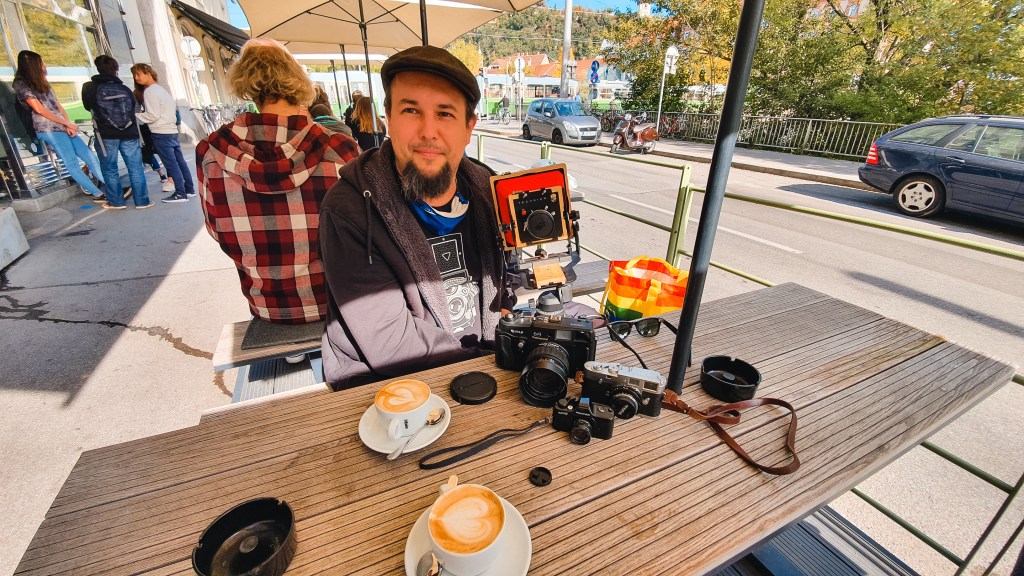
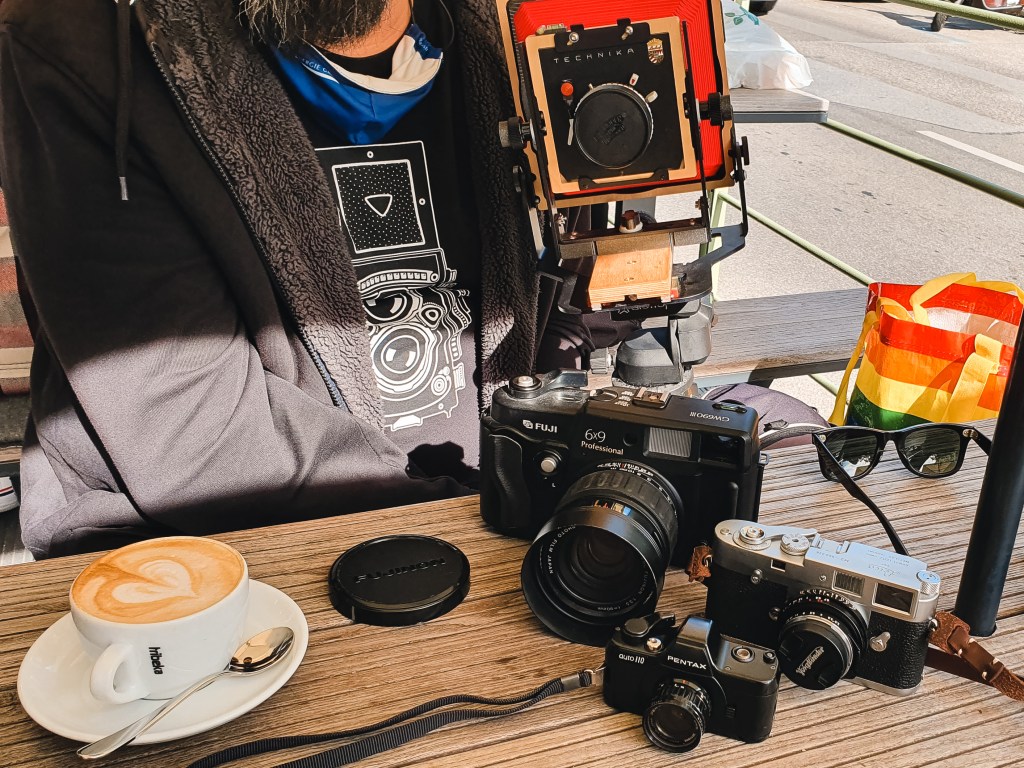
We are around the end of the second Covid lockdown here in Austria. It is hard to even think about any in-person social interaction nowadays. But at least we can recall the times when we still met up with friends. Maybe just for a cup of good coffee or even to shoot with exotic cameras. This post is a memory of such a cool event that took place in between lockdown 1 and 2 in Graz. I went out with my friend Thomas to test-drive his large-format Intrepid 4×5 camera with some Ilford HP5+. To spice things up, I brought along my new medium format beast, the Fujifilm GW690III, as well as my beloved Leica M2. To complete the format wars, Thomas has hidden a Pentax auto 110 in one of his pockets. In the end, we had cameras with four different film sizes ranging from 110 film cartridge up to 4×5 large format.

Thomas, Fujifilm GW690 III, Kodak Portra 400

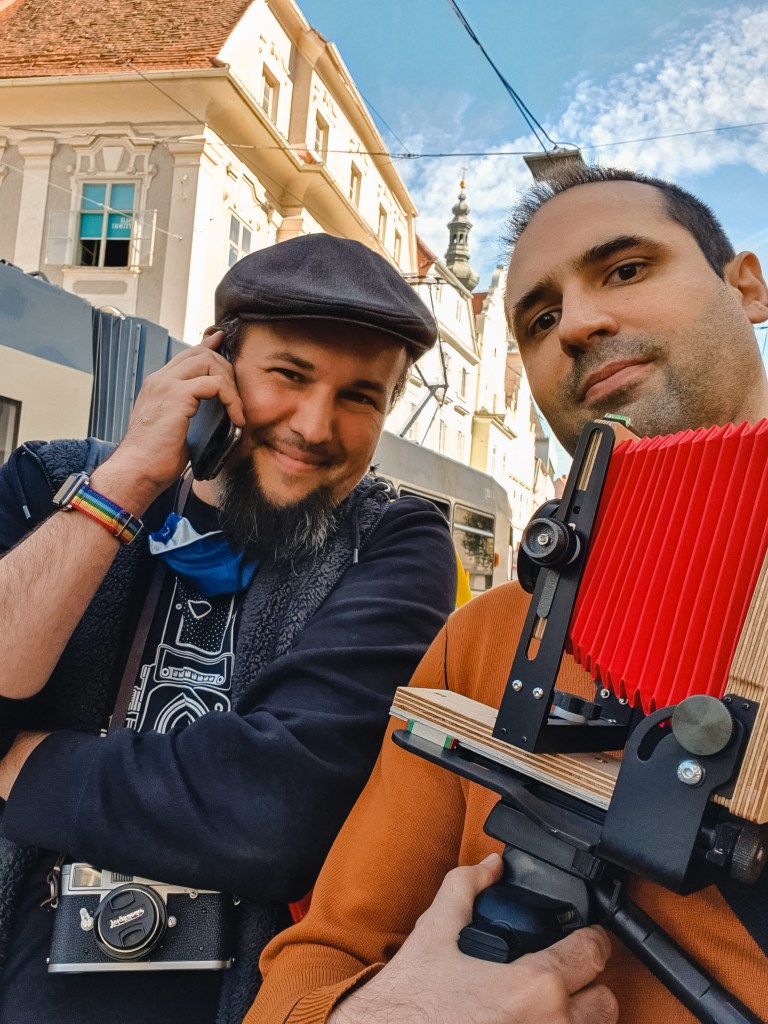
What did we do with all this gear? Well, first of all, we got some excellent coffee and talked about cameras, film photography, art, geeky IT stuff, and life in general. We also went to a local camera shop to pick up some film for the Leica. We ended up with some Agfa branded B&W stock. Thomas has got the Leica to bring and shoot while I received the privilege to carry the Intrepid with the tripod. Honestly, it was a lot lighter than I expected, but I also wouldn’t have minded twice the weight. I was happy indeed just by holding the thing.

Happy Guy, Leica M2, Voigtlander color skopar 35mm f2.5, Agfa APX 400, Rodinal. By Thomas

Needless to say that such gear is a great conversation starter. Walking with a large-format camera draws attention like crazy and curious people may even ask to take a photograph of them. This attention could be a good thing if you pursue street portraits, but it could be a course because film is not cheap nowadays. It is funny that most street photographers try to be stealthy in our personal-right-aware world and uses gear such as a Leica or a Fuji X100 to stay under the radar. But the other extreme of the size spectrum might work on the streets just as well. You can even combine the formats. Start conversations based on the big camera and snap a portrait with the Leica.

Street portrait, Leica M2, Voigtlander color skopar 35mm f2.5, Agfa APX 400, Rodinal, by Thomas

In the end, we took portraits of each other and some random people we encountered during our walk through the city.

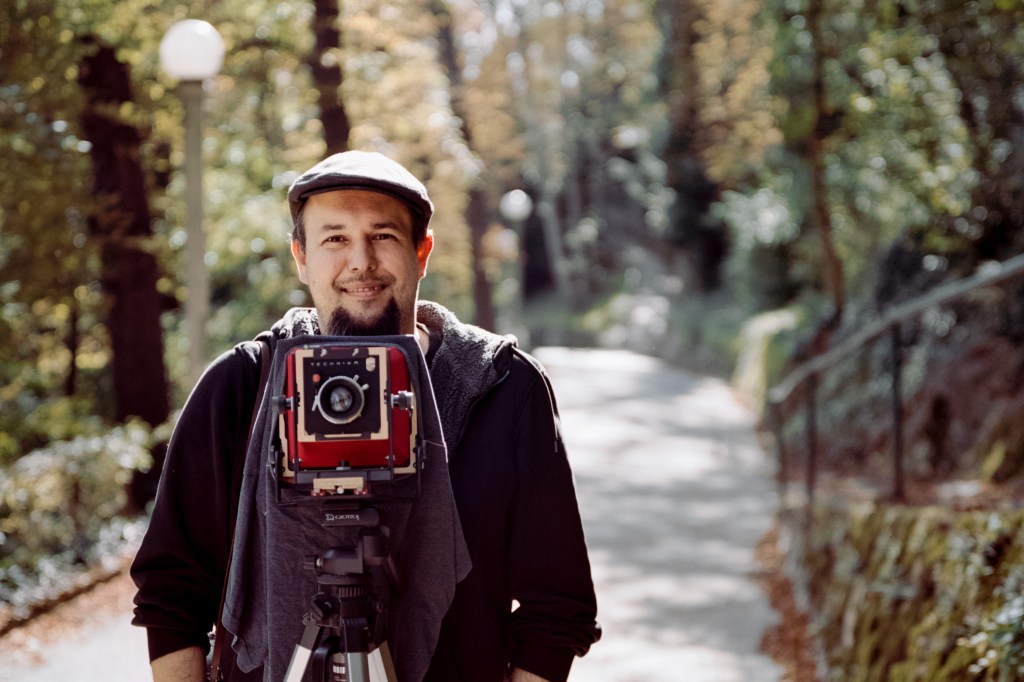
Thomas, Intrepid 4×5, SCHNEIDER-KREUZNACH Symmar – S 135mm f/5,6, Ilford HP5+, Rodinal
Gabor, Intrepid 4×5, SCHNEIDER-KREUZNACH Symmar – S 135mm f/5.6, Ilford HP5+, Rodinal by Thomas

One of which was a girl in a park who happened to also shoot film with a gorgeous Olympus OM1. I got the chance to shoot a picture with that camera too which brought back great memories of my long-deceased OM4 Ti. I am still waiting to see the results of that shoot.

Girl in the park, Fujifilm GW690 III, Kodak Portra 160
Girl in the park with OM1, Intrepid 4×5, SCHNEIDER-KREUZNACH Symmar – S 135mm f/5,6, Ilford HP5+, Rodinal by Thomas

For the last sheet of 4×5 film, I composed an architecture shoot. I did not play with camera movements, partly because the lens had a limited image circle and because I simply forgot about the possibility. Oh well, I guess there will be something to play with the next time.

Intrepid 4×5, SCHNEIDER-KREUZNACH Symmar – S 135mm f/5,6, Ilford HP5+, Rodinal

It was a great experience to try the large format way of shooting. Looking through the ground glass, sliding in the film holder, removing the dark-slide, and operating the shutter is a greatly meditative process. It has higher stakes too, which makes it even more exciting. All that said, such a slow methodical, and expensive process might not be ideal for everyone or at least not in all situations.

Will I personally go for the path of large-format photography? I think in the long run it will be inevitable (hope that Mrs. Camerajunky is not reading this). I am successfully infected. But for my current life and shooting style, the GW690III is the biggest camera I can justify. It produces massive extremely high-quality images and I can shoot it handheld, quick, and dirty on the go. But the negative size and image quality are only part of the picture (pun intended). Large format is at least as much about the process itself as about the quality of the result. I highly recommend it for everybody interested to give it a shot. Affordable cameras like the Intrepid 4×5 makes the entry into this wonderful world if not cheap but within reach for more people than ever.

About Thomas

Thomas A. Galli-Magerl is a Graz based photographer who loves to shoot with his LC-A, a camera that he carries at all times. But he is also experimenting with other formats ranging from half-frame to 4×5 large format. He is a full-stack film photographer who is not only taking pictures but also feels at home in the darkroom. He is interested in documentary photography of the LGBTQ community, street portraits, studio portraiture, and the list is growing.

My goal is to inspire those who see my work to feel and see beyond the outlines of the world around them.

You can find more about him here:

Revival

Dear fellow photographers. As you have noticed I was not very active on the blog for quite some time now. Unfortunately it was not only the case with the blog but with my film photography in general. This had many reasons including shifting priorities, too much stress and work and the need for a creative break.

But I am not here today to be negative, in fact quite the contrary. There are many things to share and many things which made me super excited. There is new software which I love, new cameras to review, awesome youtube channels I have discovered and more. Essentially I have got motivated again and I hope this new energy will revive the blog as well. There were some not so positive events to talk about as well, but eventually I think they all collectively pushed me to shoot more and hopefully vitalize this blog.

So let’s get started and see what made me enthusiastic about film photography again.

Negative Lab Pro 

The software I needed to get control over my scans.
https://www.negativelabpro.com/
For a long time I was set on the journey to find a consistent high quality home scanning and processing pipeline. I was testing and tinkering with a lot of software and I ended up using Vuescan with an Epson V700. This is a great combo which I would recommend to anyone, but I was never truly satisfied with the result. The TIFF files I was getting were not very flexible compared to RAW files from digital cameras. Many things like curve settings were baked in the files at the time of scanning. It was very difficult to color match multiple images as bigger changes required re-scans which takes a lot of time.
I am aware that my skills are probably the main issue here, but I always lusted for a scan once edit freely type of solution.


Negative Lab pro gives me what I needed. It is a Lightroom plugin which converts the negative images itself by generating a Ligtroom settings which can be reverted or adjusted non destructively. Essentially taking away the responsibility of the inversion of the negative image from the scanner software and bringing it into Lightroom. Not only that but it works fantastically simulating popular lab scanner profiles and giving me colors that I absolutely love. Now I can match series of images together more easily and I can even benefit from new versions of the software later as I can reconvert any negative at any time.

The only catch is that the software is not exactly cheap with a 99$ one time charge. But if I factor in how much money I burn on film, chemicals and how much time I invest into my photos it is actually quite fair. I would also mention that Negative Lab Pro is a creation of a single person. He is actively maintaining the software and working together with the community to develop it further. There is a dedicated Forum and a Facebook page where support can be found for any related issues in no time.
As a software developer myself I deeply sympathize with the project which was yet another reason to support it. I find it very motivating that a single person can have such a massive and positive impact and bring new life into (certainly into my) film photography.

The king is dead, long live the king!

Unfortunately my old trusted Pentacon Six TL has stuck on a single shutter speed. I asked some local camera shops if a repair would be possible. But I got very little hope after my survey. At one place they told me that they don’t service such low quality cameras because it is impossible to adjust their shutter speeds anyways. At the end, I attempted to open the camera myself to see if, by any chance the issue is something so obvious that I could spot it. Needless to say that I managed to do more harm than good and currently the P6 sits in a box partially disassembled. Since then I have got a repair manual and I hope that one day I can get it back together and use it again. To put more salt to the wound, most of my Pentacon Six lenses got stuck aperture syndrome including the 50mm, 120mm and 180mm lenses. So, I would need a full CLA on pretty much everything I own in the system except the 80mm standard lens.

E with Pentacon Six TL and Sonnar 180mm

After many said months of not shooting any medium format film, I decided that I look for a replacement camera. Something totally different, something reliable and simple. It also had to be relatively manageable in size because I like to carry my cameras everywhere and shoot hand held. I was eyeballing the 645 system cameras for quite some time but then I ran into a wonderful Fuji GW 690 III which had recently a fully CLA. Needless to say that I could not resist. Best of all the seller is a really nice guy with a freezer full with film and with a really cool portfolio . You can check out his work here.

Fuji GW 690 III

I love rangefinders for many reasons, mainly because I can manage precise focus with them. The camera is a beast, it shoots 6×9 frames yet it fits into my messenger bag. It feels lighter to carry than the P6 kit. The built in lens makes it even more rugged plus I will not be tempted to get additional lenses to satisfy my GAS. Last but not least the lack of the mirror means I can still confidently use it handheld for the kind of pictures I usually take.

Needless to say that I am very excited because of this new addition to my collection. I have already shot 3,5 rolls with it although only 1 is developed and scanned so far.

I am really curious if it will be such a good fit as I think now. But in any case, it motivates me to shoot and develop more and brings new impulses into the game.

Lab torments

I have been always developing my black and white work because it gives me full control over the process, allows quick results because I don’t have to wait for the lab and last but not least it is a lot of fun. On the other hand I have never done color film development myself. I was conditioned to believe that it is extremely difficult and best to leave it to professionals.

But recent events have made me to take a deeper look on the C41 process and as it turns out it might not be that difficult after all.

But what pushed me over the fence on this matter? I brought 4 rolls of color film to my preferred camera shop in Graz. They told me that development will take about 2 weeks because of COVID . I had no problem with this as it usually takes 1-2 weeks anyways. I have received 3 out of the 4 rolls relatively quickly (in 10 days), cut up and flattened nicely, ready to be scanned. But the 4th roll was not there. In fact it was not there after a month despite my repeated calls. It seemed that no one knew where it was and I started to be worried that it really got lost. To make it worse, that roll was the most important in the bunch. A friend of mine asked me to take some photos of his family before his kids leave the house for the first university year.

In the end, the lab found the film and the story ends without big harm. The camera shop says that there is only 1 lab available and I was not the only one who went through the same torment. The timestamp on the index print was 3 weeks old when I got the film.

I know that the low demand and the current situation does not support film labs. I have no problem to wait even several weeks if I know that my film is in good hands, tracked and I will get it in the end. But my trust is shattered.

I will develop my color film myself. You will surely see some posts about my journey with color process. I am also very open for suggestions. I need to figure out how to do this economically. Batch sizes, shelf life and similar topics are all on my research list.

YouTube

I am quite addicted to YouTube which I need to get into check somehow. But at least I discover from time to time a channel which inspires my film photography. I am not sharing my full list of photography channel subscriptions at once, but here are some of my top pics without any particular ranking or ordering among them.

grainydays

The guy who runs the channel is completely crazy in the best possible way. If it is strange for the first time keep watching he has a special humor, a big punch of self irony and great photos. I like especially his night shoots.

Kyle McDougall

Kyle has fantastic camera reviews and I really enjoy his medium format architectural work. He is not only showing his work but also his way of working including, scanning, archiving and behind of scenes of his videos.

T. Hopper

Great moody videos with beautiful pictures and a lot of info about film stocks. She also makes great essays about photographers, film and art in general.

Jamie Windsor

Very informative educational videos mostly about digital photography and editing. But also very well thought through and intelligent video essays about art and photography.

This is all I had in mind for now. I hope you find this new type of post interesting and perhaps my enthusiasm makes some of you go out to shoot some film too. If so, please wear a mask and I wish you all good light.

Las Vegas on Portra

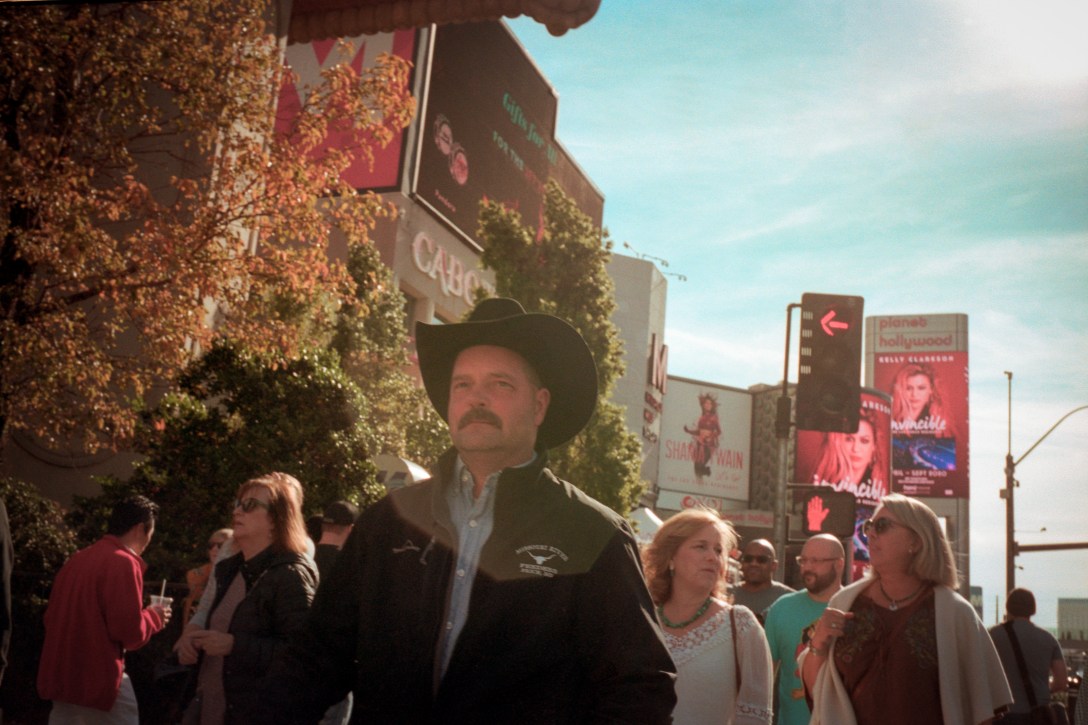
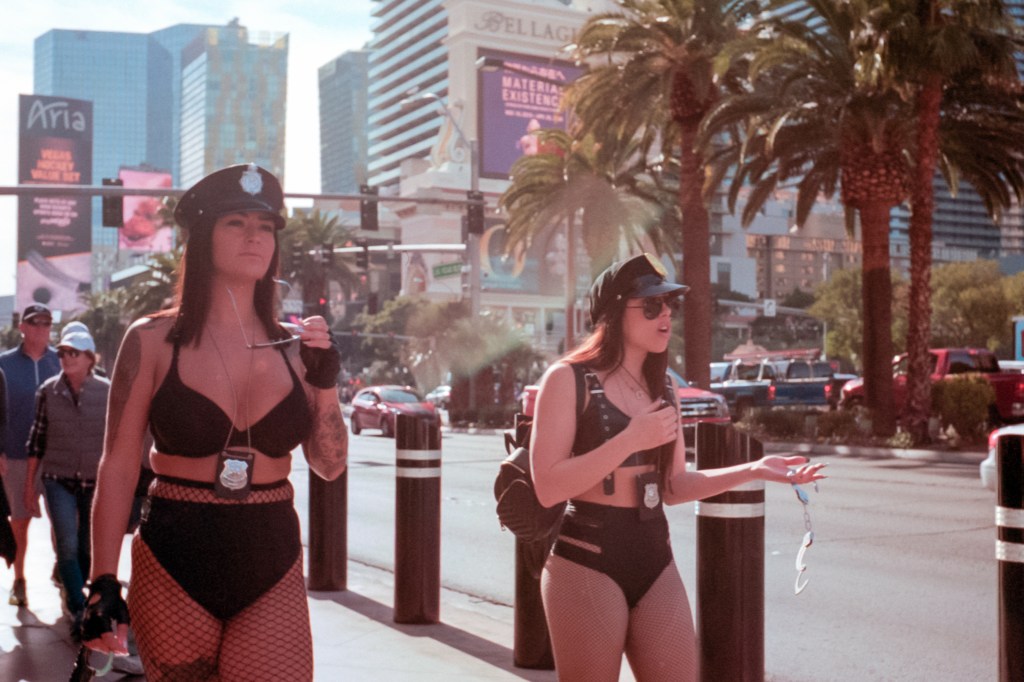
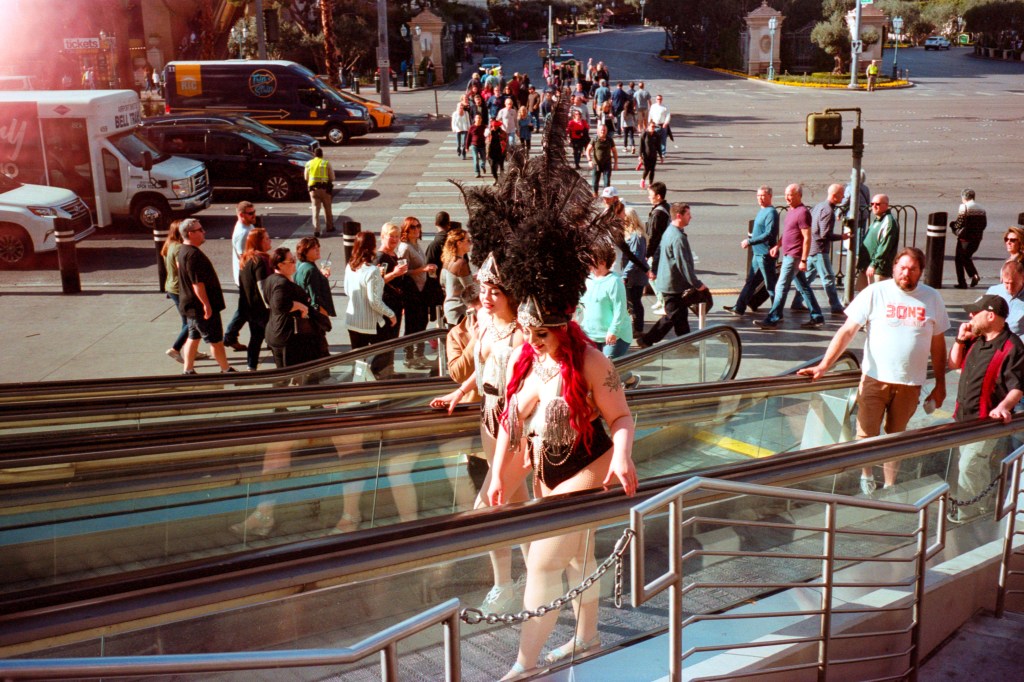
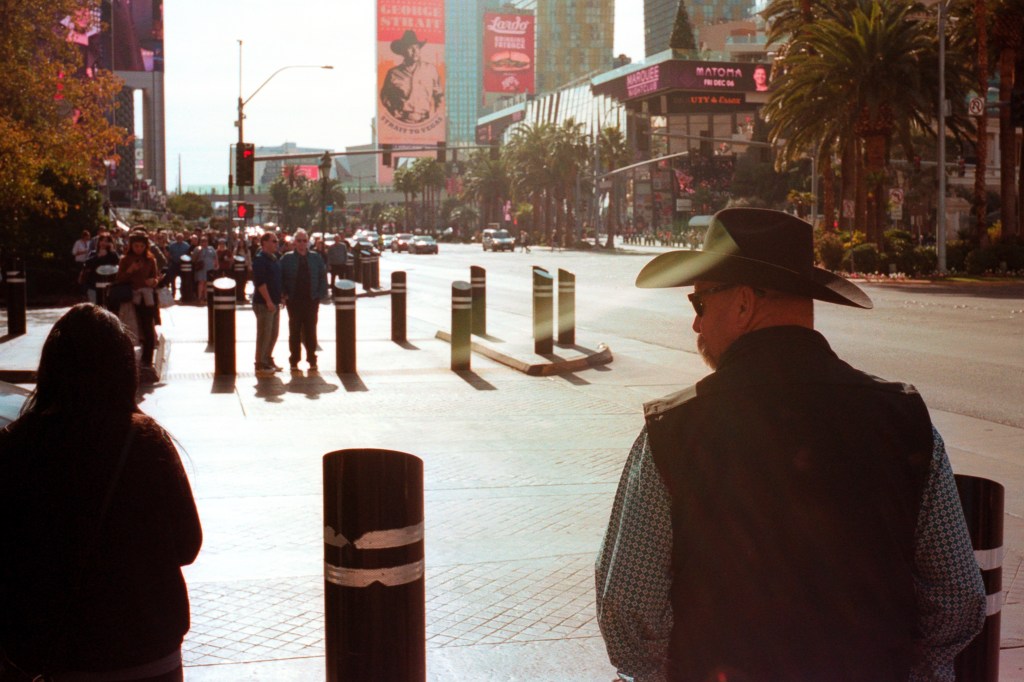
I have brought 2 types of film Las Vegas trip. CineStill for the night and Portra 160 for the day. The big mistake, however, was that I only had 1 camera. I planned to shoot the Portra first and then switch to the more sensitive tungsten-balanced film as it gets darker. Well planed I thought and loaded up the daylight film. I shoot only a few frames on the first day on the way between venues.

I had to quickly realize that I had very limited time during the day and I would better off by shooting at night. The though the decision was made and I winded back the film and made careful notes how many frames I have gone through. I switched to CinceStill for the rest of the trip. Needless to say that I’ve put back the roll of Portra into the camera as soon as I got back home and finished not much later. But the adventures of these photos were not over yet as the Covid-19 lock-down hit before I could get back the film from the lab which delayed this post with an extra 2 months. But at the end of the day, I have got back the developed film and I was able to scan it. The rewind seemingly had no negative effect and you can now see my little collection of Las Vegas street photos shoot on Kodak Portra 160.

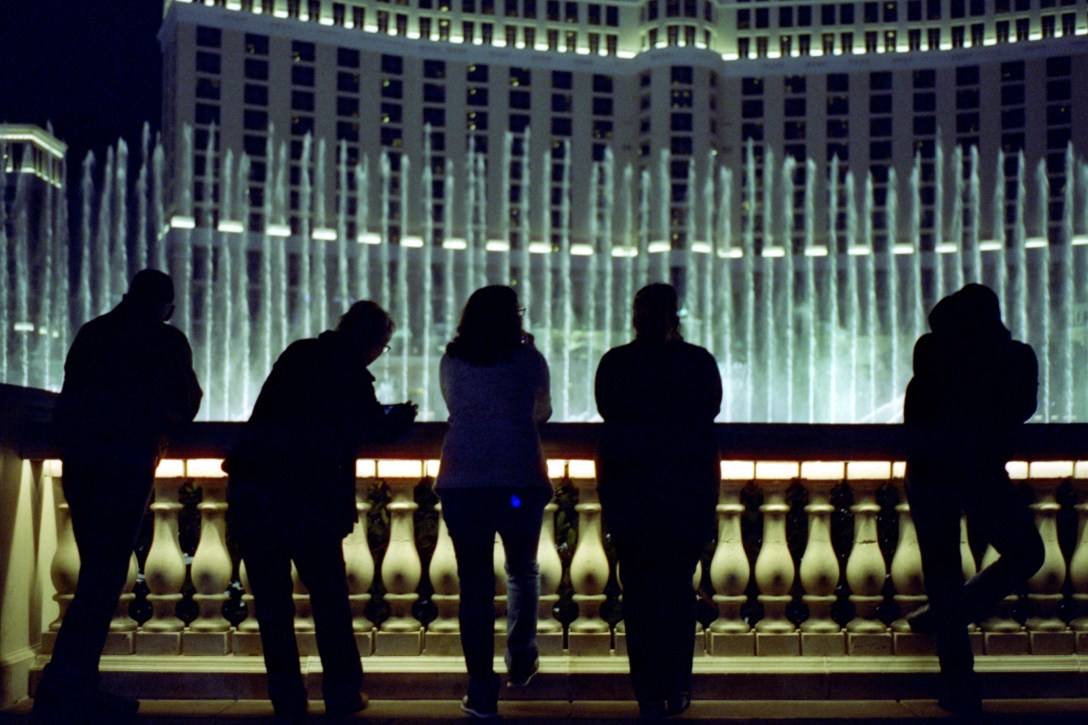
Las Vegas on CineStill

Ever since I have started to take photographs I was always chasing a cinematic look. In fact, this is one of the reasons I shoot film. While it is undoubtedly possible to achieve film look with digital cameras I find it easier by using film. Also, it is a lot of fun to experiment with different film stocks. Discover the characteristics of each individual film types. Under which circumstances to use one over another and what artistic effects can be achieved by abusing a particular type of film.

One of my holy grail films I desperately wanted to put my hands on is CineStill. It is a tungsten-balanced motion picture film converted to be developed in a regular C41 process and thus more accessible for still photographers. In theory, this film can provide that cinematic look in terms of color, tonality, grain as it is, in fact, an emulsion used by Hollywood. Of course, the cinematic look is a product of many other factors than the film stock such as lens, subject, lighting, but it is one of the main contributors.

For their color negative films, Cinestill Film modifies Kodak motion picture cinema film, allowing it to be developed with the C-41 process rather than the Eastman Color Negative process. Cinestill Film converts the Kodak motion picture cinema film by removing the Remjet backing, a separate Anti-halation backing used to protect the film in motion picture cameras. Due to the removal of this anti-halation backing, Cinestill Film exhibits a glowing effect on the image in areas with strong highlights.

Wikipedia

It was clear that sooner or later I was going to try CineStill, but I needed an occasion or project to justify it. Thankfully at the end of 2019, I have got the chance to visit a conference in Las Vegas (AWS re:Invent 2019). I thought it was a brilliant opportunity to try this film so I bought 2 roles from eBay. It was a week-long conference so I hoped that I was going to have some possibility to explore the city and shoot film.

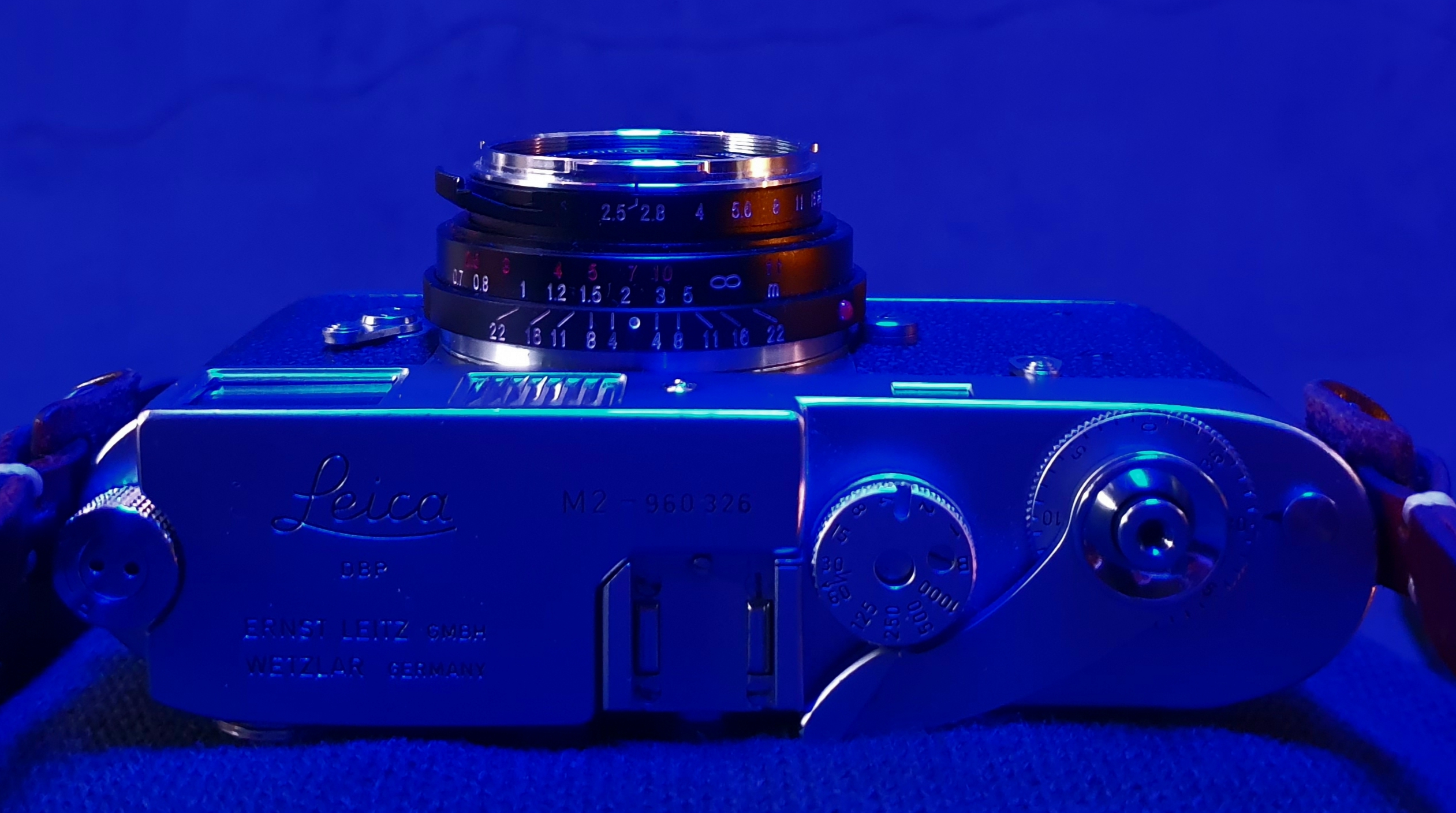
My camera of choice was the Leica M2 paired with a Voigtlander color skopar 35mm f/2.5 pancake lens. I also brought with me an 50mm f/1.5 Sonnar for the extra speed. But I ended up using the 35mm lens a lot more as it was easier to carry around and the wider field of view made a lot more sense too. The f/2.5 maximum aperture was bright enough because of the high speed of the film and because the city was brightly lit by the different advertisements at all times. My biggest problem during the night was not the amount of light but the ever-changing nature of it. Images on the screens were flashing, trucks were driving around with wall-sized LED light sources mounted on them. It was such chaos that I gave up on using a light-meter. Instead, I started to rely on gut feeling and intuition. I had to gamble on my exposure.

Use CineStill 800Tungsten when photographing:

  •  tungsten/incandescent light
  • candle light
  • fluorescent light
  • mixed tungsten and fluorescent
  • mixed tungsten and limited daylight

https://cinestillfilm.com/ QA

Night shift: He was trying to diagnose/fix the broken green section on the screen on the building’s facade. It was around 4 am.

As expected halation is very evident when bright light sources are in focus. This is due to the removal of the anti-halation remjet layer. I personally find this effect very interesting and unique. For the most part, this glow gives an extra punch to the atmosphere.

strong halation around the stop hand light.

Avoid using CineStill 800Tungsten (or expect a unique look) when photographing:

  • open shade
  • cool light
  • daylight overpowering tungsten
  • heavily backlit images
  • strong window light
  • ontent including intense points of light (christmas lights, chandeliers, neon signs, bright windows)

https://cinestillfilm.com/ QA

My impressions

I have to say that this film did not disappoint me. I shot it under numerous recommended and not recommended situations and as the expected unique look was delivered in a big way. I had been caught off guard regarding the amount of halation, but I must admit I like this effect very much. It helps to smooth out the otherwise not so great bokeh of the little pancake lens. I expected more noise given the 800 ISO rating, but I was pleasantly surprised about how well the noise is controlled. The colors are fantastic and it was very easy to set the white balance on the files in Lightroom. Not sure if it has anything to do with the film though. The only situation which produced results that I did not like and/or was very hard to color correct was in open shade. Especially if people were in the frame. Skin tone reproduction in shade is not the best application for this film based on my limited experience with it. It is also on the not recommended situation on the CineStill website.

All in all, it is a great film with absolutely unique characteristics. I think it is worth to try.

A roll of Velvia

I have and always had a love-hate relationship with Velvia. It is a fantastic film stock for sure. When used for fitting subjects, it delivers results like no other film. It packs an extra punch in terms of color saturation, contrast, and resolution. My only problem is that I mostly shoot portraits and if anything this is not the best use for this film. Also, I am more careful with positive films as they need to be exposed very precisely, they cost more to buy and to get developed. That is why I kept a roll of Velvia 50 in my fridge for more than 10 years. I was waiting for the right moment to load it into a camera that moment has failed to come.
I think I became overly circumstantial with my precious film stash. So I decided to use up this roll of Velvia this summer. We have planned a holiday to visit friends next to Hamburg with plenty of opportunities to take pictures. I was especially excited about the seashore. In the end, we brought home many photos most of which were digital. Around the same time, we have got a nice telephoto zoom lens for our digital camera. We were eager to test the new lens and the little roll of Velvia got pushed back on the priority list once more.
Eventually, I have finished shooting this roll even though it has taken me months biting into the autumn. Despite the traditional wisdom, I have shot a lot of portraits on it besides the well-expected landscapes. I have used it for everything and I am glad I did. Most of the photos turned out just right. To be said, I had to dial back the reds in post-processing on all portraits. In this post, I would like to share some of these randomly captured moments. If you have any thoughts about them or about using Velvia, please leave me a comment.

Zsuki

During the Christmas holiday, I have managed to find the time to develop a few rolls of film. I am very happy about it because lately, I have struggled with my developing process. I have encountered many trivial issues including the use of an exhausted developer, air bubbles and the list goes on. This time I have tried everything to get better results. I have purchased a new developer tank so I could turn it over without pouring liquids out. I have also reverted to my trusted ID-11 developer which meant that I had to wait until enough rolls had been finished to make it worth to mix the chemicals.
All in all, I am pleased with the results even though there is plenty of room for improvement. My plan is to share some of the shots during the course of 2-3 posts depending on the themes I can find. Hopefully, I can get some feedback on from you.

This first set is from a family visit where I could take some portraits of my sister Zsuki. The color pictures are depicting me on the same occasion. I was having fun taking pictures of branches and other random objects at first. These digital shoots were taken by my lovely wife. I think they complement the analog pictures nicely as they show the camera and lens I used.

I am not sure why I am drawn to photograph branches like these. They are very rarely keepers. Still, it seems to be a good idea from time to time.

Finally, here are the portraits of Zsuki. Thankfully she is very relaxed at the front of the camera which made it very easy to photograph her.

I have used my C Sonnar 50mm f/1.5 lens on my favorite f/2 setting which results in a fantastic creamy bokeh. I find it challenging to focus with this lens wide open and the bokeh starts to fall into crazy territory at f/1.5. So f/2 is my sweet spot.

As for the development, I have used 1+1 dilution for the ID-11. Developed for 10,5 minutes on 20° Celsius with agitation in every 30 seconds. The film was Ilford FP-4 Plus and I shot it at stock speed. I have expected a bit less grain from the film, but I am almost certain that this is because I have slightly underexposed and pushed too hard during post-processing.

If you see anything obviously faulty in the description of my development method please let me know in the comments.

Digital Classic, Fuji X100

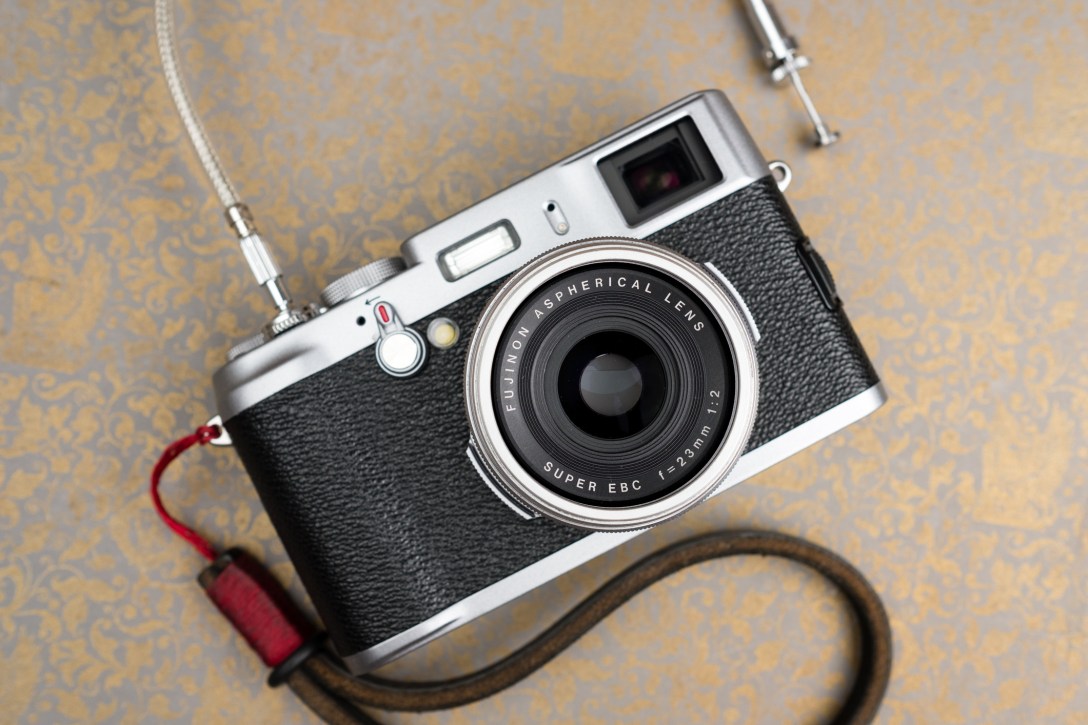
What qualifies a digital camera classic?  Certainly the age, popularity and the reputation of a camera are all important factors. These all contribute to the level a camera embedded into our collective photography consciousness.  I cannot tell if the original Fuji X100 (revealed in 2010) can already be considered as a classic camera by the general public, but it is definitely on my list.

_DSF1536_b

This little gem has grabbed my attention right at the time it was announced. Such a striking retro design spiced up with a big sensor and a rangefinder like a viewfinder which actually made sense in an autofocus camera. I fell in love with it immediately and spent quite some time on the elegant Fujifilm website dedicated to this camera. The hybrid viewfinder was something quite special. To be honest, I was a bit concerned about the longevity of the little screen which jumps in an out of sight. But it was very innovative at the time and unique to this day. The lens looked interesting too. A compact 35mm equivalent lens designed for the sensor specifically. The whole package was really appealing to me. But, I am a late adapter. I like to wait until a product matures. Indeed the X100 had several issues which were mainly addressed by firmware updates. Needless to say that newer incarnation of the X100 has reportedly improved on the early weak spots of the camera such as focus speed or easy to bump dials. At the end of the day, I have picked up a Leica M2 instead. After all, many of the so appealing design clues on the X100 likely originate from the Leica M.

_DSF1490.JPG

As the years passed by, I have almost lost sight of the small camera. Of course, I was reading the news about the releases of the revised versions of it. But was no longer particularly intrigued by it.

Until recently when a colleague of mine spotted my Leica on my desk. He casually mentioned that his camera looks almost the same the one front of me. Classic cameras are great conversation starters. So, we have started to talk and soon I learned many cool things about Dominic. I knew that he grew up in the US but I had no idea that it was the neighborhood where Ansel Adams lived at the time. I knew that he is a photographer, but I did not know that he is shooting with an X100. The best part is that he is not only owning the first generation X100, but he was also kind enough to borrow me so I could take pictures with and of it for the blog.

_DSF3590_DSF3594_DSF3606

My impressions

The camera is gorgeous. It felt in the hand just like I have imagined. It is small, compact and well built. Obviously, it is not the same feel as my M2, but I have never expected it to be. Brass has been replaced with magnesium alloy which makes the little Fuji lighter. But the less weight suits the X100. It is a camera which could come with me anywhere without noticing it much. I think this is probably the point of it. A camera which looks great even special takes brilliant images and small and lite enough to carry everywhere.

Menus and button layout

I have used other digital Fuji cameras before ranging from a 10-year-old point and shoot to the XT-2. It is interesting to see how Fuji carries over design characteristics over camera generations. For example, the delete photo animation is very similar to all the cameras I have used although more and more elegant and refined with each iteration. The X100 felt like a Fuji camera immediately even so it took some time to learn it’s special quirks. The menu system is slow and (unsurprisingly) looks dated compared to newer models. But once I set up everything to my taste, I could forget about the menus. I have programmed the Fn button for ISO and the Raw button to control the built-in ND filter. The button placement needed some practice time too. The AF point selection button felt out of place at first and I have still not completely figured out all the functions of the rotating ring around the D-pad. My biggest and possibly my only real complaint is that the exposure compensation dial is way too easy to move accidentally. I had many occasions of wrong settings after getting the camera out of my bag.

The viewfinder

My favorite part, on the other hand, is the hybrid viewfinder. I love to use it in optical mode. The projected information overlay is ingenious. We may take customizable information overlay granted today but we usually find it in full electronic finders. The instant preview in the viewfinder is also something I enjoy. The little display screen slips into place right after the photo has been taken to show the captured image without the need to ever remove the eye from the viewfinder. Since the image in the electronic preview mode different from the view seen through the optics, I am always full of curiosity before I press the shutter. I excited to know how the camera would interpret the exact same view I am seeing. To be said, this experience is not for everyone. My wife does not like the fact that the lens is visible in the viewfinder. She always has been more fascinated by the image on the ground glass of a medium format SLR. A rangefinder-style optical finder does not show the depth of field. Everything is up to the imagination of the photographer, except this case the camera shows the result an instant after the actuation of the shutter.

Eva & Adele, Watermusic, 2003/04

The lens

Over the years there were several changes to the X100 cameras. The sensor and the processor have been updated many times. Autofocus and operation speed have been greatly improved throughout generations. Even the viewfinder have seen some changes. As far as I know, the only remaining constant is the lens. If it ain’t broke don’t fix it. This lens is definitely noteworthy and I think it is a big part of the X100 experience. I enjoy using the aperture ring very much. Has a good feel to it and also good to look at. The leaf shutter built into the lens is very quiet and lets me sync flash with any shutter speed. Of course, the drawback of the leaf shutter is that the maximum shutter speed depends on the aperture. The more the lens is open, the lower the maximum shutter speed gets. Luckily there is a built-in ND filter in this tiny lens. This way it is possible to shoot wide open on a sunny day with mechanical shutter without any extra accessory. Because the lens is the same on any version of the X100 family the adapter lenses are compatible with all of them. Did I mention how small this lens is? It is very comparable with my Voigtlander Color Skopar 35mm f/2.5 pancake lens in size. I have always been a fan of pancakes despite the optical tradeoffs they need make for the sake of small size. In fact, the Fujinon 23mm f/2 is also not flawless. It could get a little soft wide open and it shows slight distortion as well as a moderate amount of vignetting. The latter two can be easily corrected in post-processing or in camera on later models.

Fujinon XF 23mm f/1.4 is massive compare to the built in 23mm f/2 lens built into the X100.

Bokeh

Bokeh is, of course, a very subjective quality. Personally, I find the bokeh of the lens mounted on the X100 alright. Not amazing by any stretch of the imagination, but pretty decent considering that it is a wide pancake lens with only a moderately fast f/2 maximum aperture. I have tried to compare it against my own 23mm f/1.4 Fujinon lens. You can find a comparison below. In the first example, the XF 23mm f/1.4 produces the smoother result in my eyes on f/2 but the difference is not very big.

If the background is further away it is even harder to tell the difference. Could you tell from this second example which photo was taken with which lens?

The XF 23mm f/1.4 is a sharper lens and it can open up more. At f/1.4 there is no competition anymore with the lens on the X100, but it is worth to notice the size and the price difference.

Samples

I have used the camera in as many situations as I could to gain experience with it and collect sample shoots. The following photos were taken during family weekends, walks in lunch breaks and I have even experimented with table-top camera photos with flash and softbox. Post-processing of the pictures varies from slight adjustments to heavy color grading to show what kind of results can be achieved with different approaches. I know that my little portfolio is far from a comprehensive demonstration, but I hope that it gives an idea and some of you will find it interesting.

More Leica M2 comparisons

I just cannot have enough comparison shots of these cameras. They are so similar yet very different.

I have even recreated one of my early Leica shoots with the X100. Originally I use the Leica M2 and it was about 4 years ago. This is a terrible comparison as the installation has changed. No plastic wrap on the metal frame anymore, but we have got an extra cactus. To make matters worse, I have probably taken the first photo with a 50mm lens. Just like the cameras, the photos are similar in some ways, but they are also very much different.

Klasse Tobias Rehberger. More information about this sculpture here.

Final thoughts

Do I like the Fujifilm X100 classic? Yes, I like it very much. It is light and small, good looking and at the same time very capable. But most importantly it provides a unique user experience. I love the viewfinder, the leaf shutter, the ND filter, the dials, the design and last but not least the photos I get out of it. A camera is more than the sum of its component and in this case, I can confirm that there is a character to it. Why haven’t I bought one if I like it so much? I have got some unique cameras already. My heart is still at the film side of the photographic spectrum when I want to enjoy myself taking pictures. That is why I have a Leica M2. For my choice for a digital camera had to be more practical with interchangeable lenses. But it is a Fujifilm camera and it was the original X100 which planted the idea to consider this route at the first place. Would I recommend it? I would definitely recommend the lineup. Perhaps a later model is a better choice with more mature AF system and a newer sensor. But I find the X100 classic perfectly usable today. Just make sure that the firmware is up to date.


Thank you Dominic to borrow me your camera and make this post possible.

If you have wondered, the map on the first picture is strange because it is a World Atlas from 1930. I have found this map in the paper garbage and found it fabulous for backgrounds. The inner side of the cover has the golden pattern which you can see on most of the pictures about the camera.