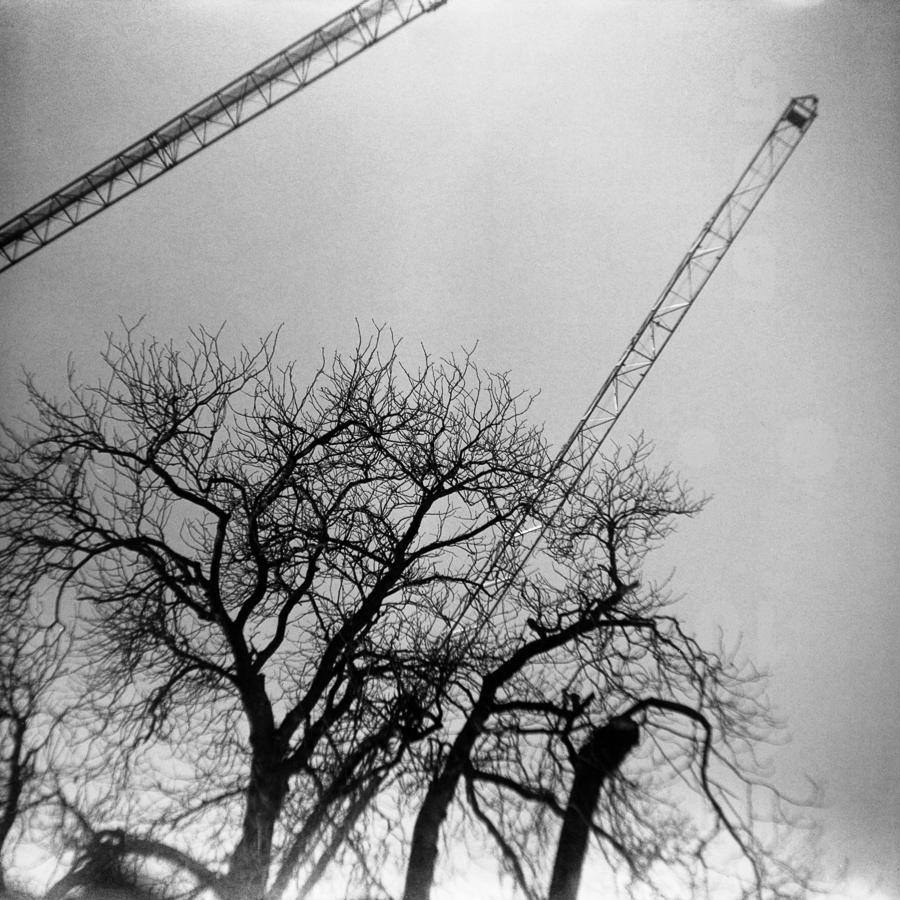
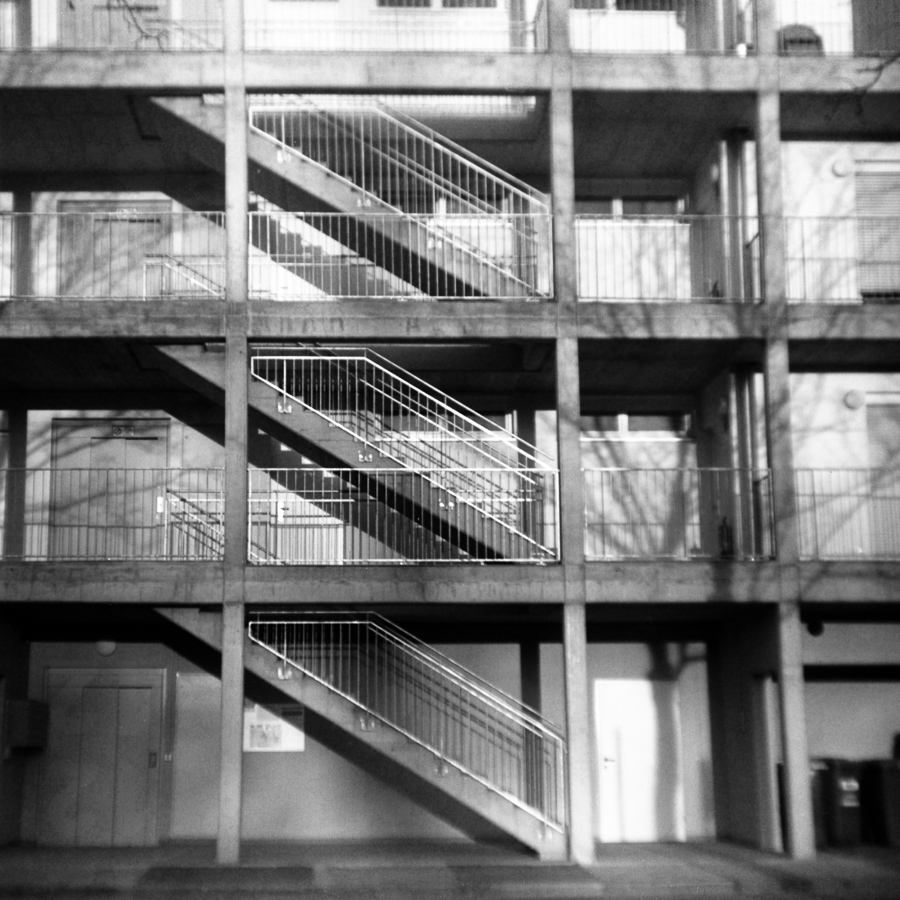
Lomography Daguerreotype Achromat Art Lens

This article was a very long time in the pipeline. For one reason or another I always postponed it even though I promised to Thomas (who kindly lend me this lens) to write my opinion about it. It might be that I don’t really write about gear which I don’t particularly in love with.

The controversy

I have a love/meh relationship with Lomography. There are products which I absolutely love such as the LomoGraflock 4×5 Instax back and some of their film stocks. In general I am really happy that they are there, form a community and bring more diverse options to photography.
But on the other hand I am not interested in funky plastic toy like gear like Holgas. I totally get why they appeal to a lot of people, it is just not my cup of tea. And also I am outright allergic to cringy marketing.

The Achromat lens while being made of glass and metal by its very nature leans into the lo-fi category to me especially with the creatively shaped aperture inserts.

As for why the cringy marketing nerve was pushed for me? The massive decorative text on the barrel of the lens:

Daguerreotype Achromat
by Chevalier
a Paris 1839

Achromat simply means that the lens is designed to focus two colors at the same point exactly.
While this is true that such a lens design was used on the official Daguerreotype cameras in 1839, and that lens was created by Charles Chevalier, this lens is a very far relative to the original one.

Chevalier lens on Susse Frére Daguerreotype camera
Lens built by Charles Chevalier for the Susse Frères Daguerreotype camera.
image by liudmilanelson1x1
 (Image rights)

The original lens while had the same amount of lens elements and the placement of the aperture was similar was a very different beast. It had a much bigger image circle, the lens elements had different shapes and it was a lot slower. It was also nicknamed as the landscape lens.

By Paul Chin (paul1513); self created; a block diagram of the Chevalier Achromatic Landscape photographic camera lens. (Wikipedia)

In the end, I decided to give Lomography a break on this though as they clearly say that the lens is an Achromat inspired by the original design of Chevalier which is not wrong.

I had to reevaluate my feelings after I realized that the naming of the Lomo Petzval lens did not bother me at all. Could be that my judgment is tainted by the how much I actually like that lens….

So I had some baggage to unpack and process before I have even held the lens in my hands.
But let’s see how my opinion shifted after actually using the lens.

My setup

I used my mirrorless digital camera (Fujifilm XT2) with the Achromat. Initially I tested a simple adapter which allows mounting of Canon EOS mount lenses to my Fuji X camera. But because I wanted to experience as much of the image circle with all the lens character that comes with it, I decided to use my EOS to X focal length reducer aka speed-booster.

This setup allowed me to play with the lens very comfortably. Using a mirrorless digital camera means that I could stop down the lens while being able to still see a clear image in the viewfinder as the camera compensates for the darker lens by boosting the signal. Focus peaking and punch in focus was also really useful.
The speed-booster helped to combat the crop factor and made the lens a stop brighter while supposedly should not had made any change on the way the lens rendered.

The best setup would had been a native full frame camera with Live view + focus peaking and in body image stabilization. Of course any other setup would be fine including EOS film bodies, though the viewfinder can get really dark once stopped down to any usable aperture.

Image quality

The image quality of this lens is certainly a mixed bag. Wide open it is simply terrible, soft and full with all kinds of aberrations. There is no big surprise there, this is after all one of the simplest lens design imaginable.

Fig 1. Achromat
Barabás János-Dr. Gróh Gyula: A fényképezés kézikönyve 1956

What is quite interesting though is how much things improve by stopping down. Around f8 the images are kind of OK, but certainly usable with a touch of character.
It really is crazy how much can be achieved by such a primitive optical formula if moderate apertures are acceptable for the photographer.

Sharpness

Let’s not talk about it. From f11, it is usable. This is not a lens for critical high resolution use cases.

Flares

The lens is not particularly prone to flaring. Less glass-air surfaces means there are less opportunities for internal reflections. Still, it is possible to throw some rainbow flares into the mix. I am not sure if it has anything to do with the lens, the UV filter I used or perhaps the speedbooster played a role.

I like the soft gloomy effect here

Bokeh

An aspect which I like is the bokeh. The fewer glass elements also means that the background blur is really soft without onion rings, or any other madness produced by complex modern aspherical lenses. Especially in close focus scenarios the bokeh is really pleasing indeed.

I have not played too much with the different non spherical aperture inserts. I am sure they could be fun, but I was more focused on the “normal” image quality.

Conclusion

Without a doubt the Achromat is a special lens. It looks apart both from the distance and the images it produces are also recognizable. It is for sure a good conversation starter which can be very useful for street photography.

The lens is well built, no plastic involved and stopping down improves on the image quality dramatically which makes it usable as a normal lens. It is manual focus only, but on a mirrorless camera, nailing focus is not very hard.

Otherwise you can embrace the pictorial nature of the lens which is again something that stands out from the crowd.

Could be a painting


All in all, I think Lomography has achieved what they set out to do with this lens and I it has it’s audience. Am I part of this audience? Not really. While interesting, this lens is not something I would buy. In addition, the fact that I can borrow this lens from a friend any time I need it for a project also eases my urge to get one. I will probably try it again on film in the future.

It definitely raised my curiosity towards other Lomo lenses in the lineup such as the Petzval with it’s crazy swirly bokeh. Hopefully it will take less time to put together an article about that lens.

A second opinion

In order to get a more well rounded review, I have asked Thomas (the proud owner of the Achromat), to share some of his photos taken with this lens.

So far I only have the pictures and I know that he used a mid range film EOS body to take them. I may update the post with more details regarding film stock and maybe even with his thoughts about the lens.

Ilford Pan F 50, wide open

I really like this portrait. Even though it is very soft, potentially even out of focus, it successfully captures an expression.

Ilford Delta100, Lumière aperture plate 4,5

The funny highlights in the bokeh are not obvious upon first inspection, but they provide enough eye candy to move the viewers attention from the subject on a longer look. I think this gives a bit extra kick to this image. It is already a killer shot as it depicts a Cannonet camera.

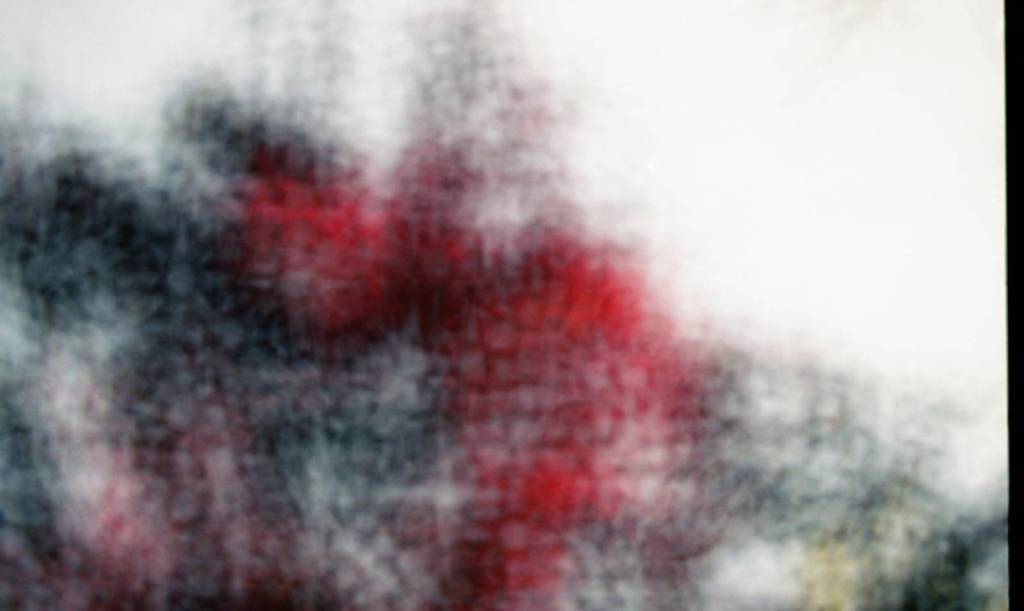
These abstract photographs are part of a four seasons series. Though to me a bit too far gone, it is hard to argue that they are unique. I have to admit that as a series they kind of work. These ones were shot on Kodak Ektar 100 using the Aquarelle Plates f6.3.

Expired Kodak Ektachrome slidefilm

And finally a psychedelic one. Not sure what is going on with the colors, but I can imagine that temperature control was deliberately sabotaged by Thomas during development for artistic effect. I would certainly consider this lens to produce cover art for goa trance albums.

You can find the work of Thomas here.

If I get more context or photos with this lens, I will update the article and I hope that you enjoyed this second set of pictures as much I did. If so, please drop a comment.

Further reading

If you like the Achromat design, I have an article about an old Hungarian box camera called Pajtas here. In case you were interested what can be achieved by a lens design with just 1 extra lens element, check out the article about a Trioplan.

Some other useful links:
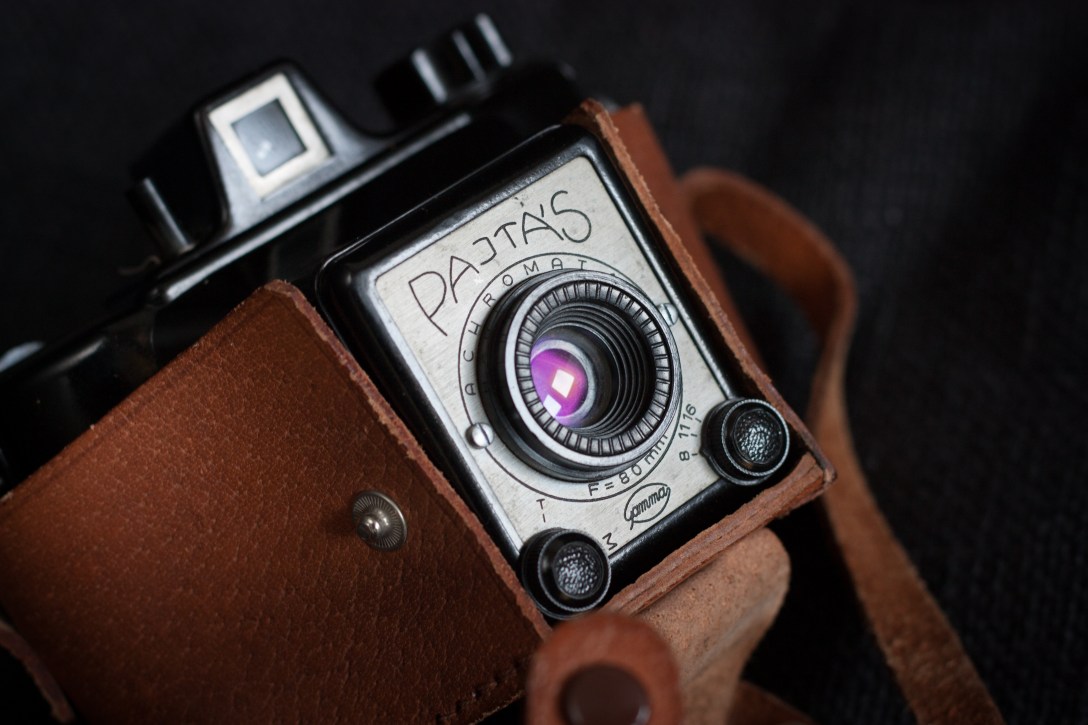
Pajtás

Gamma Pajtás Box Camera

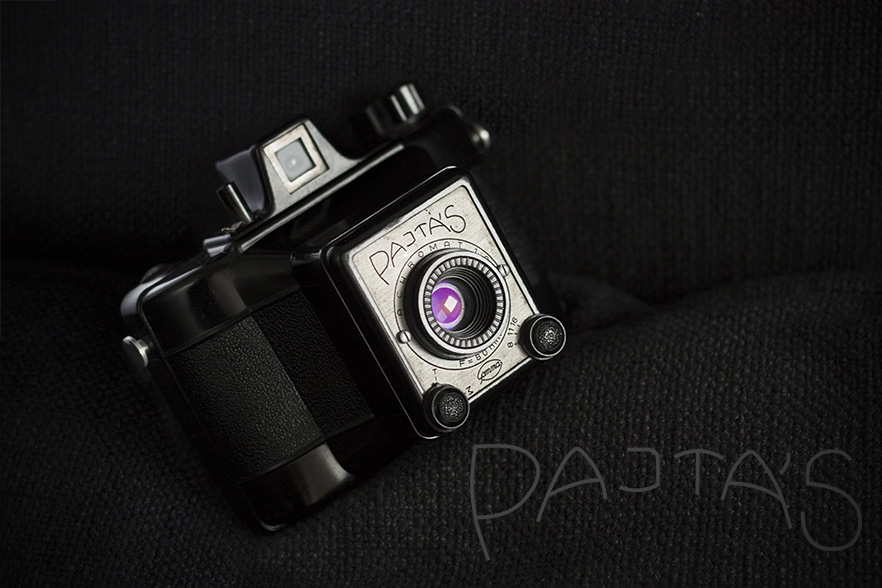
Pajtás is a simple box camera made in Hungary in the 50’s/60’s and as you would suggest this was not a high-end piece of technology even at those times.

Normally I seek for perfection in photography and related equipment and I try to write about cameras here which are capable to produce respectable results or at least represent fine craftsmanship. The Pajtás is far from perfect in any of the aspects of build and image quality, therefore it was not particularly exciting for me until now.  So why do I yet write about this camera and most importantly why should you read this review, knowing that I will probably conclude that this camera is crappy but lovely at the same time?

My first and probably strongest reason is that this camera is one of the not too many which were made in my homeland and therefore holds a significant value for me. It also means that this camera is not as well known outside of my region so unless you live in Hungary or nearby, there is a pretty good chance that you have never heard of it.

On the other hand, the Pajtás could be interesting for those who like the history of photography or history in general because of several reasons. First of all this camera features an Achromat lens which can give us an insight into the dawn of photography as the very first daguerreotype cameras had lenses with similar construction. In other words, the images taken through the lens of this box machine can show us a little bit of the taste of the character of the photographs that were taken centuries ago.

In addition, this camera is an iconic relic of industrial design from a not too distant, yet completely different era where the market was driven by strange forces. These were among the toughest years of socialism in Hungary. Production was planned in 5 years cycles and there was literally nothing that was impossible to sell.  In these times this camera was the affordable and available option for almost a generation.

Through these glasses, we might see this camera a little different and at least for me, it is special to hold and even better shoot with it.

All in all, if you are interested in history, strange unique cameras, or even Lomography than this article is for you.

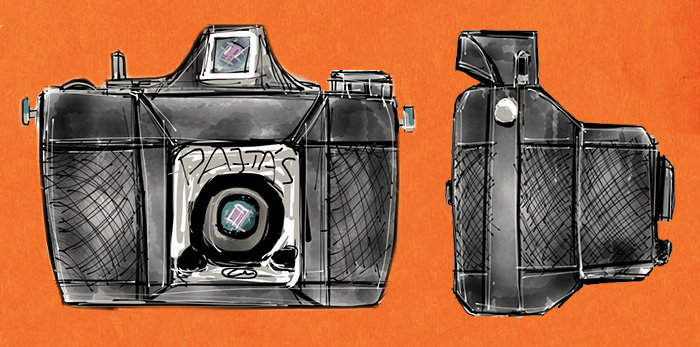
Pajtás drawing

The story

As always I try to collect as accurate information about the history of a camera as possible, but it is possible that I state something wrong. If I did, please send me an e-mail or leave a comment. Corrections are always welcome.

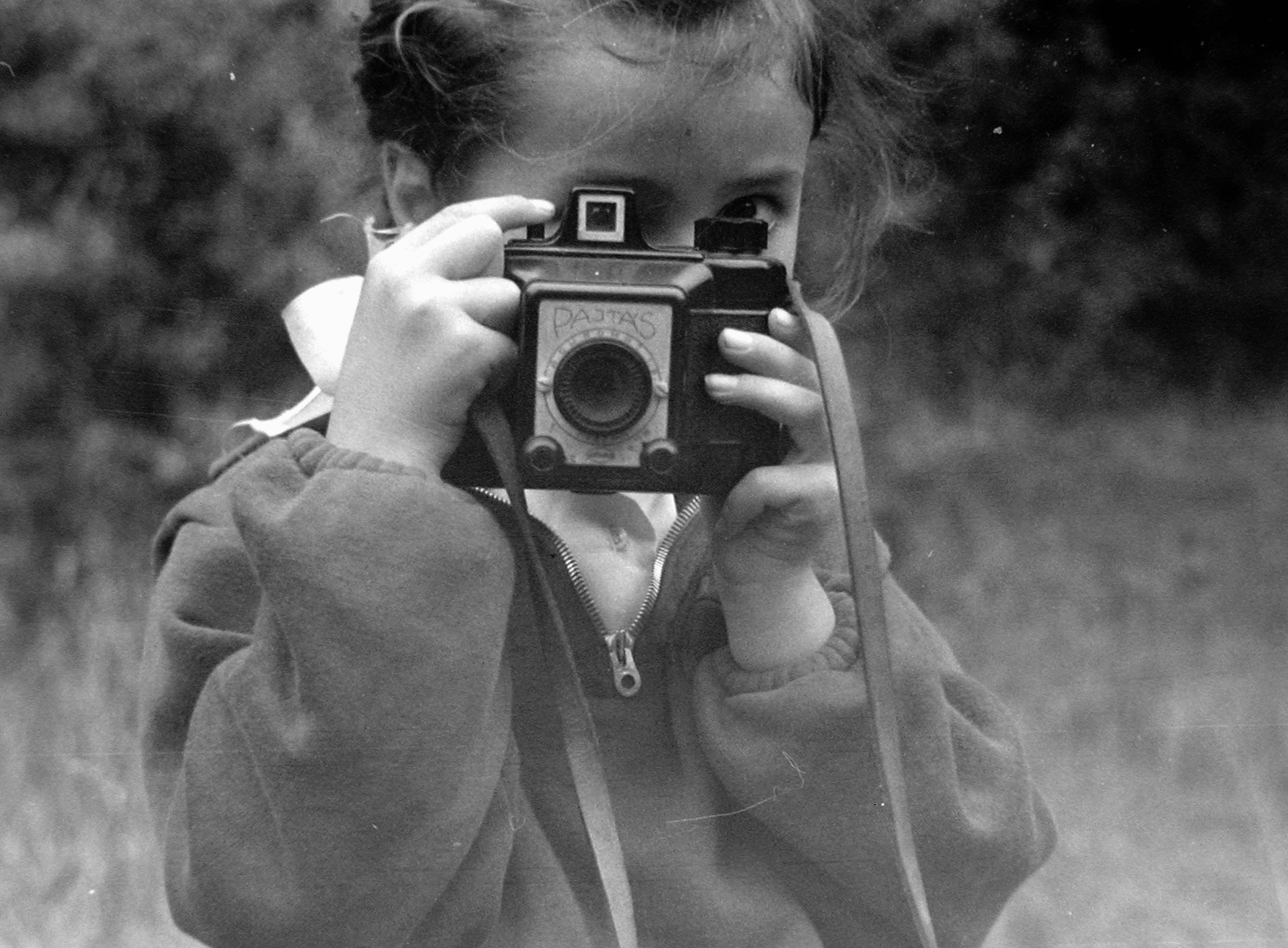
Around 1960, This photo is part of the Fortepan collection of 19041 amateur photos. It is licensed under CC share alike Hungary.

The members of the young pioneer organization were called Pajtás in socialist Hungary. It was the equivalent of the word comrade for young people. Oddly I had no idea about this meaning of this word until I started to read about this camera. But it has to be said that I was born in the 80’s when socialism was already quite melded in Hungary.

As the name suggests, the camera was intended for a young audience and it was extremely successful. It was affordable, reliable and most importantly available, so many had received a Pajtás as a present for various occasions such as graduation.

The camera was made between 1955-1966 by Gamma although the emblem has changed to FFV from 1960. FFV stands for Fővárosi Finommechanikai Vállalat (Metropolitan Works for Precision). Interestingly Gamma is still an existing company, even though they don’t manufacture cameras anymore.

The designer was János Barabás (1900-1973) who was mainly responsible for lens design at Gamma and we can thank him for the many great lenses used by Hungarian cameras.

The price of the camera in 1964 was 160 HUF and it was possible to buy a leather case for an additional  45 HUF. [1]

Pajtás datasheet

  • Type Box camera
  • Country Hungary
  • Company Gamma, FFV
  • Designed by János Barabás [1]
  • Production dates 1955-1966
  • Quantity 100.000 approx
  • Film type 120 type roll film
  • Lens Built-in Achromat f/8
  • Apertures f/8, f/11, f/16
  • Shutter speeds 1/30s, Bulb
  • Focus fixed
  • Body material Bakelite
  • Weight 395g

Construction and operation

The camera is almost as simple as possible. It is made of Bakelite which allowed mass produce it on a low price.

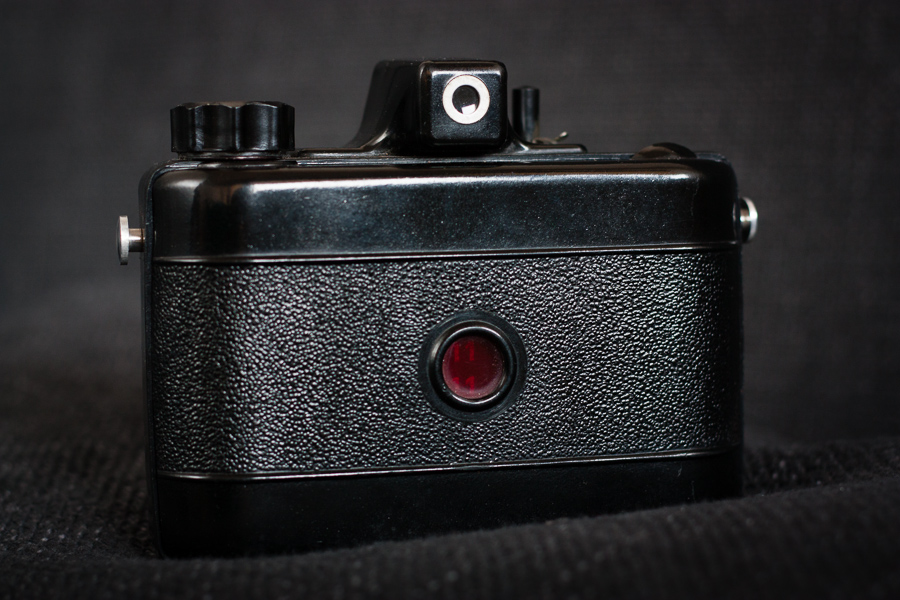
The back has another nice feature, a little red window which keeps us informed about the number of the actual frame. Basically, the back of the film (in fact the covering paper) is visible through this window so you can see the printed numbers on the paper. While this is a robust solution, it is advisable to cover this window most of the time, especially if you use higher sensitivity film.

The film can be advanced by a knob at the top of the camera while you have to keep an eye on the frame counter window. There is no other way to determine how much you need to advance the film but to look at the window. This mechanism also makes it easy to take multiple exposure or overlapping shoots.

The shutter release is a simple column and a rotating switch around it with two positions. The red dot means locked and obviously, the white mark indicates that the shutter is free to press.


Viewfinder

Since it is not possible to focus with this camera, the viewfinder is rather simple. It contains a lens for correct framing, but this is not a great pleasure to use. It is bright enough but considerably blurry to my eyes.
To be fair, this viewfinder does the job just well enough. It gives you some approximation about what will be on your photograph and if your subject is not too close the parallax error is not significant.

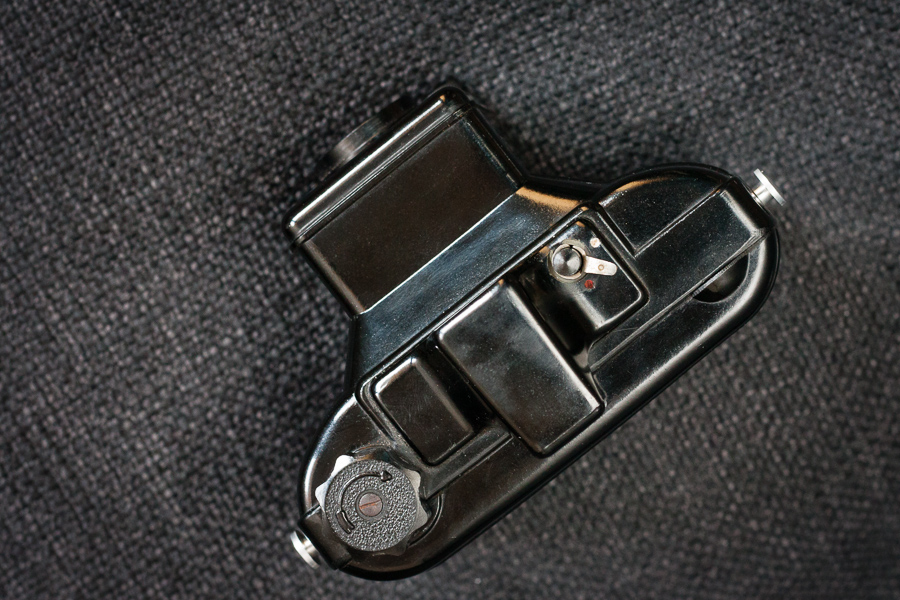
Pajtás top

To be fair, this viewfinder does the job just well enough. It gives you some approximation about what will be on your photograph and if your subject is not too close the parallax error is not significant.


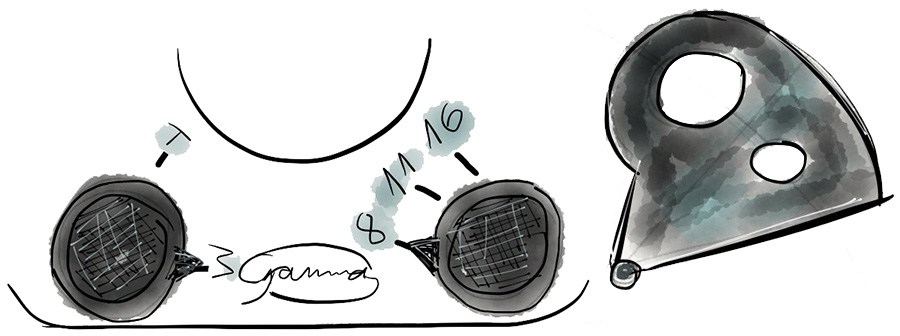
(Left) shutter-speed and aperture settings, (right) aperture mechanism concept

There are only 2 shutter speeds available M (Moment) 1/30 sec and T (Time) which stands for bulb. There is a better offering in aperture settings though you can select f/8, f/11, and f/16 options. Both the shutter speed and the aperture settings can be selected with dedicated dials on the front plane of the camera right below the lens.

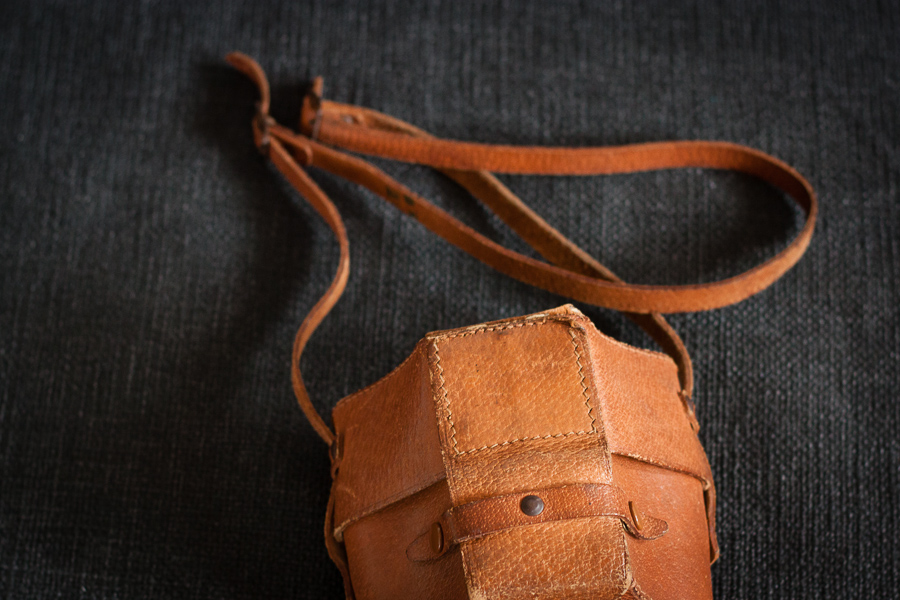
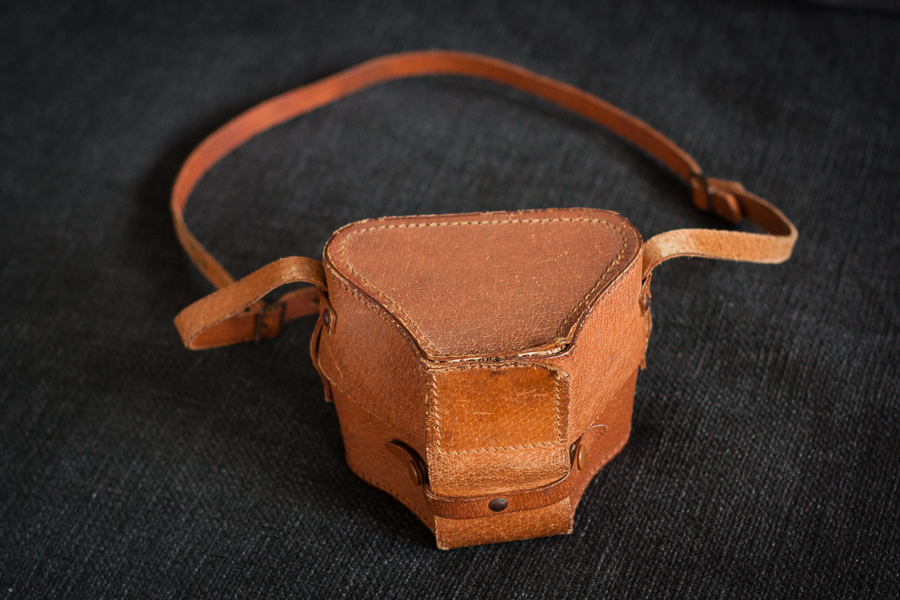
Pajtás in leather case

All apertures are completely rounded and as far as I can see (without disassembling the camera) it is done by a metal plate with 2 holes on it. When the maximum f/8 aperture is selected, the plate is completely off the way, but as you turn the switch for selecting smaller apertures the appropriate hole slides into place behind the lens.

Pajtás in leather case

The leather case is pretty nice, it protects the camera very well. In the meantime, it has a hole in the back to read the frame-counter without dismounting the camera. My only concern is that you cannot separate the front part of the case (covering the lens) so you cannot use it as a half case.

The lens

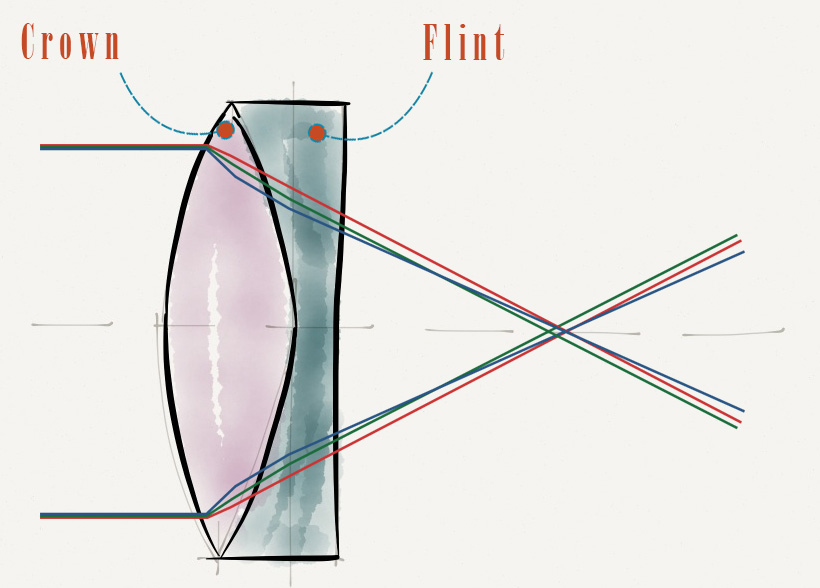
The lens is an 80mm f/8 Achromat manufactured by MOM (Hungarian Optical Works). It is a classical landscape lens consisting of 2 elements: a positive crown and a negative flint element.

The lens which was designed and manufactured by Charles Chevalier for Daguerre was an achromatic landscape lens in the 1830s. Although that lens was different from the one that can be found in the Pajtás, the basic concept is the same. The achromatic lens was a huge step because for the first time it corrected some of the main aberrations which can be found in an optical system.

Achromatic doublet

An achromatic lens or achromat is a lens that is designed to limit the effects of chromatic and spherical aberration. Achromatic lenses are corrected to bring two wavelengths (typically red and blue) into focus in the same plane.

Wikipedia Achromatic lens

These lenses are typically featuring low apertures because the rays entering the lens far from it’s axis need to be cut off by the stop in order to maintain image quality.

The lens used in the Pajtás camera gives no big surprises. It is focused to the hyperfocal distance so everything on the photo from some near distance will be sharp. It is also supported by the relatively small aperture, that is why depth of field is quite big.

The lens looks coated as I can see some purple cast on it when the light is appropriate. In general, it is not too prone to flare. Of course, there are not many elements in the lens so there are not many surfaces to bounce and reflect on. On the other hand, the interior of the camera is highly reflective so flocking could probably improve image quality and contrast.

Image quality and sample shoots

As you would expect, the image quality is not at all amazing. It is decent from a camera like this and I have to admit there is some charm of the strong character. Sure, most of the effects produced by the lens can be mocked by clever applications on any smartphone, but that is not the same. You must know that you work with a high random factor when you shoot with this camera.

(Graz, Austria), Pajtás, Lomo Lady Gray 400, Kodak D76, Canoscan 9900F

So far I shot only 1 roll of Lomo Lady Gray 400 film with this camera as the first trial. In general, an ISO 400 film is probably too fast for this low shutter speed, but since winter is coming and we are having many dark days it was a good choice. I have some Hungarian Forte Supercolor 100 film in my refrigerator (expired in 1995) which could be a stylish combination with this camera.

Distortion test (Graz, Austria), Pajtás, Lomo Lady Gray 400, Kodak D76, Canoscan 9900F

The lens is sharpish in the center but blurs everything off around the edges. It sometimes even creates the impression of shallow depth of field, but this is not the case.

Distortion is apparent, but I couldn’t hold the camera perfectly perpendicular against the staircase and my scanner is also not the best in keeping the film flat. Anyhow, I think that the geometrical distortion is not the biggest issue compromising image quality here.

Camerajunky (Graz, Austria), Pajtás, Lomo Lady Gray 400, Kodak D76, Canoscan 9900F

The numbers and circle signs on this shot (almost all shots have some) belong to the back of the covering paper of the film. I am not sure how they managed to get to the photos, but they did. If anyone has any idea, I would be happy to read it in the comments.

Also, there are signs of light leaks on almost all of my shots. This most likely happened, because the camera does not seal light perfectly. I am seriously considering to use some black tape next time I put the film into my Pajtás.

Tram reflections, (Graz, Austria), Pajtás, Lomo Lady Gray 400, Kodak D76, Canoscan 9900F

This frame was partially overlapped because of my fault. I have not transferred the film correctly.

Cycles (Graz, Austria), Pajtás, Lomo Lady Gray 400, Kodak D76, Canoscan 9900F

Using flash

There is no flash connection on this camera, so in theory, you cannot use flash with it. On the other hand, the 1/30 of a second is slow enough to fire flash manually at the right time. But probably the best strategy is to shoot in bulb mode in very low light or in complete darkness and fire the flash while you keep the shutter release pressed. I have done some successful experiment with the latter technique so I can recommend giving it a try.

Conclusion and recommendations

The Pajtás is not a rare camera, it is extremely cheap and just as light to carry. It is extremely easy to use as well. I believe it is even able to produce nice images in good hands.

Because of the simple construction there is literally nothing which could break in it. It is relatively safe to pick one with good cosmetics as it is almost certain that it will work properly. Eventually, this is not the camera we would expect completely accurate shutter speed from.

My only concern is the back which is a bit flimsy to me, but it can be secured by some black tape. And of course the Bakelite body is very rigid and therefore fragile, so it is advisable not to drop it.

If you like box cameras and the imperfection of the images they produce, or you are a fan of the retro design, then this camera could be a good choice for you.

Further reading

Big thanks to Ivan for the English proof reading!